
By Cook Once. Eat Later. • Updated August 24, 2026
Vegetables are one of the most important components in a balanced freezer meal — but they’re also the easiest to ruin. Mushy broccoli, soggy peppers, and watery vegetables are usually the result of poor technique, not bad ingredients. The good news is that texture loss is completely preventable. With a few simple adjustments in cooking, cooling, and reheating, you can preserve flavor, structure, and quality every time.
How to Stop Vegetables From Getting Mushy in Freezer Meals (Quick Answer)
To keep vegetables from getting mushy in freezer meals, choose freezer-friendly varieties, slightly undercook them first, cool them fully, and reheat gently.
- Best vegetables for freezer meals: broccoli, carrots, peppers, onions, green beans, peas, corn, asparagus
- Avoid high-water vegetables: lettuce, cucumber, celery, zucchini, raw tomatoes
- Slightly undercook before freezing so reheating finishes the cooking process
- Cool vegetables completely before sealing containers to reduce trapped moisture
- Reheat gently with the lid partially on first, then uncover near the end
- Use sauce strategically to add moisture without making vegetables soggy
Disclosure: This article may contain affiliate links. As an Amazon Associate, I earn from qualifying purchases at no extra cost to you.
Freezing Vegetables
Vegetables are packed with nutrients and are an essential part of a properly built freezer meal. The problem is that they can quickly ruin your meal if they aren’t prepared correctly. Applying a few simple techniques will make mushy broccoli, soggy peppers, and watery vegetables a thing of the past.
Want a complete freezer meal system? Get the free blueprint.
Why Vegetables Get Mushy After Freezing
When you freeze vegetables and later reheat them, changes happen at a microscopic level.
Vegetables contain a high percentage of water. When that water freezes, it forms ice crystals. Those ice crystals expand and damage the vegetable’s cell walls. Once reheated, those weakened cells collapse — causing softness, moisture loss, and texture breakdown.
If vegetables are overcooked before freezing, this effect is amplified. The structure is already weakened, and freezing only accelerates the damage.
Freezing doesn’t ruin vegetables.
Overcooking and excess moisture do.
Vegetables That Hold Up Well
Some vegetables naturally perform better in freezer meals. This usually comes down to water content and structural density.
Vegetables that freeze and reheat well:
• Broccoli
• Carrots
• Peppers
• Onions
• Green beans
• Peas
• Corn
• Asparagus
• Kale
• Beets
These vegetables have stronger cell structure and tolerate freezing better than high-water vegetables.
Choosing the right vegetable from the start gives you a major advantage.
Vegetables That Commonly Fail
The opposite is true for vegetables with extremely high water content and delicate cell structure.
Vegetables to avoid in freezer meals:
• Lettuce
• Cucumber
• Celery
• Zucchini
• Raw tomatoes
These vegetables tend to collapse after freezing because their structure cannot withstand ice crystal formation.
Not every vegetable is built for freezer meal prep — and that’s okay.
The Undercook Strategy (Critical)
Undercooking your vegetables is not a mistake — it’s intentional.
Vegetables should be slightly undercooked before freezing because reheating finishes the cooking process.
Your goal:
• Preserve firmness
• Maintain structure
• Slightly brighten color
A good indicator is a mild color change and slight softening on the outside while the interior remains firm.
Two effective methods:
Quick high-heat sear
Brief contact with high heat develops surface texture without fully cooking through.
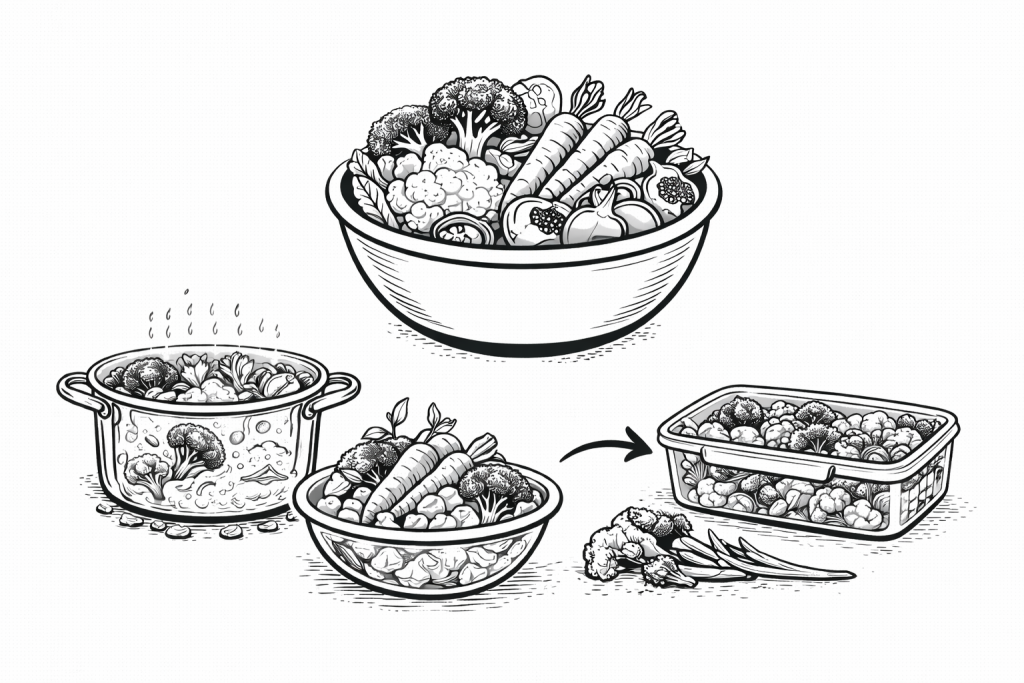
Quick blanch
30–60 seconds in boiling water, then immediately transferred to cold water to stop cooking.
Think roughly 30% cooked.
Stopping the cooking process quickly slows enzyme activity and protects texture during freezing.
Control the first cook — and the reheat becomes easy.
Moisture Control Before Freezing
Vegetables are the most moisture-sensitive component in a freezer meal.
Excess moisture leads to:
• Ice crystal formation
• Liquid pooling in containers
• Excess steam during reheating
Always allow vegetables to cool completely before sealing and freezing. If necessary, spread them out briefly so trapped steam can escape.
Intentional moisture is good.
Uncontrolled moisture destroys texture.
Stop guessing. Build freezer meals that freeze and reheat perfectly.
Reheating Without Overcooking Vegetables
Reheating is the final stage of cooking — treat it as part of the process.
If possible, thaw first. This reduces overall heat exposure and prevents overcooking.
When reheating:
• Start with the lid slightly on to create gentle steam
• Remove the lid toward the end to release excess moisture
• Stir if possible for even heat distribution
Because you portioned properly and avoided thick blocks of food, your vegetables should reheat evenly. Make sure you use the best container possible to freeze your vegetables and meal in.
View the exact container I use here.
The goal isn’t maximum heat.
The goal is controlled heat.
If done correctly, vegetables should still have structure, color, and flavor — not softness and water.
Common Vegetable Mistakes
Vegetables are simple — but easy to ruin.
Avoid these mistakes:
• Overcooking before freezing
• Choosing high-water vegetables
• Sealing containers while vegetables are still hot
• Skipping the cooling step
• Reheating too aggressively
• Not using sauce strategically
Most texture problems come from rushing, not from the vegetable itself.
Final Thoughts
Mushy vegetables can ruin an otherwise perfect freezer meal — but they are completely preventable.
Success comes down to three things:
• Choosing the right vegetables
• Slightly undercooking them
• Controlling moisture from start to finish
When you treat vegetables as a technical component instead of an afterthought, your meals stay vibrant, structured, and satisfying.
Texture isn’t luck.
It’s control.
Looking for the tools behind this system?
View Recommended Tools
About the Author
Here at Cook Once Eat Later we share freezer meal recipes, meal prep systems, and practical freezing guides designed to help busy people save time without sacrificing flavor. Our focus is helping meals retain their texture, moisture, and quality long after they’ve been frozen.
Follow Cook Once Eat Later on Instagram for freezer meal tips, recipes, and meal prep inspiration.
FAQ
Why do vegetables become mushy in freezer meals?
Vegetables become mushy when the water inside their cells freezes and forms ice crystals. These crystals expand and damage the vegetable’s cell walls. When reheated, the weakened structure collapses, causing soft or watery texture. Overcooking before freezing makes this problem worse.
Should vegetables be cooked before freezing in meal prep?
Yes, but only partially. Vegetables should usually be slightly undercooked before freezing so they finish cooking during reheating. Fully cooked vegetables often become soft or mushy after freezing.
What vegetables freeze well in meal prep?
Vegetables with stronger structure tend to perform best. Good options include:
• Broccoli
• Carrots
• Peppers
• Onions
• Green beans
• Peas
• Corn
• Asparagus
• Kale
• Beets
These vegetables hold their texture better through freezing and reheating.
What vegetables should not be used in freezer meals?
Vegetables with very high water content often break down during freezing. These usually include:
• Lettuce
• Cucumber
• Celery
• Zucchini
• Raw tomatoes
These vegetables tend to collapse and release excess water after reheating.
Does blanching vegetables help prevent mushiness?
Yes. Brief blanching slows enzyme activity and helps preserve color, flavor, and structure. After blanching, vegetables should be cooled quickly to stop the cooking process before freezing.
Should vegetables cool before being frozen?
Yes. Vegetables should cool completely before being sealed and frozen. Trapped heat creates condensation, which forms ice crystals and increases the chance of mushy texture and freezer burn.
Can frozen vegetables be reheated without becoming soft?
Yes. Controlled reheating helps preserve texture. Starting with the lid partially on traps steam and allows gentle heating, while removing the lid near the end releases excess moisture.
What is the biggest mistake people make with vegetables in freezer meals?
The most common mistake is overcooking vegetables before freezing. Since the reheating process cooks them again, vegetables that are fully cooked beforehand often end up soft or watery.