This guide explains how long freezer meals last, how different components affect shelf life, what shortens freezer life, and how to tell when a meal is still good to eat — without guesswork or unnecessary worry.
How Long Do Freezer Meals Last? (Quick Answer)
Freezer meals last different amounts of time in the freezer depending on their components but these general guidelines are a good starting point:
- Most freezer meals taste best within 2–3 months
- Many remain good quality up to 3–4 months when stored properly
- Frozen food kept at 0°F (-18°C) stays safe longer, but texture and flavor decline over time
- Airtight containers help prevent freezer burn
- Label meals with the freeze date for easy rotation
- If a meal smells off after reheating or thawed too long, discard it
Disclosure: This article may contain affiliate links. As an Amazon Associate, I earn from qualifying purchases at no extra cost to you.
How Long do Freezer Meals Last?
The best part of freezer meals is that you can make a lot of them, freeze them, and forget about them. You have a variety of meals ready for busy days without thinking twice. At some point, though, the question comes up: how long do freezer meals actually last? This guide explains how long freezer meals typically keep, how to store them safely, and how to tell when a meal is still good to eat.
Want a complete freezer meal system? Get the free blueprint.
How Long Freezer Meals Usually Last
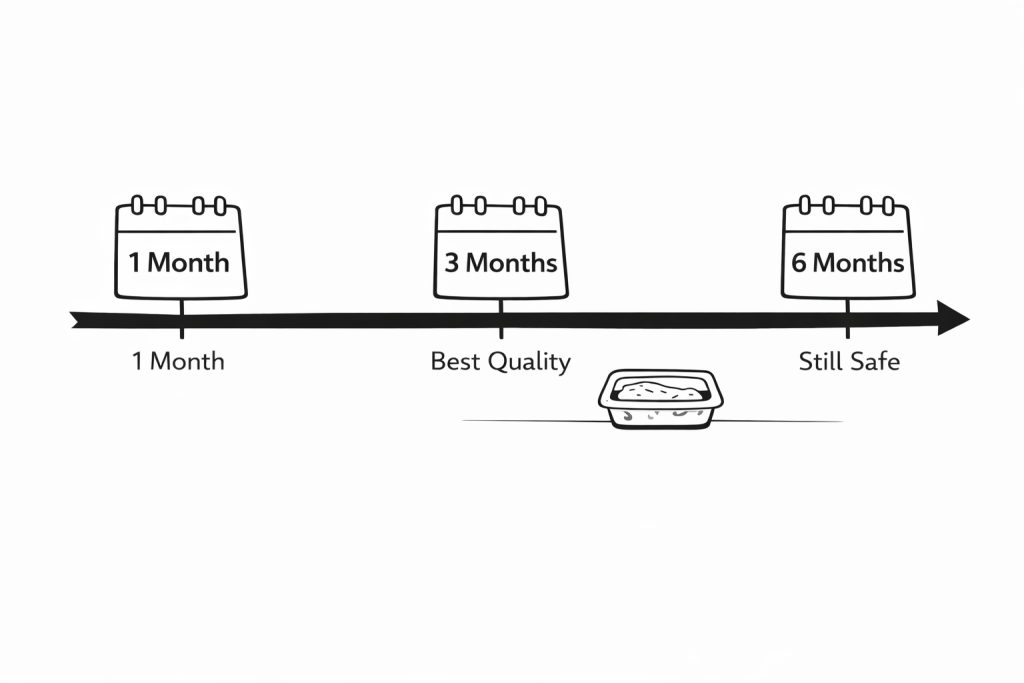
In general, freezer meals are at their best quality within 3–4 months of being frozen. This isn’t an arbitrary timeframe — it aligns with USDA recommendations and applies to most cooked foods.
It’s important to understand that this timeline is about quality, not safety. When kept frozen at 0°F (-18°C) or below, freezer meals remain safe to eat well beyond this window.
A simple way to think about freezer meal lifespan:
• Best quality: 0–3 months
• Noticeable flavour or texture decline: 3–4 months
• Higher risk of freezer burn: Beyond 4 months
Freezing slows or stops spoilage by creating an environment where bacteria, yeast, and mold cannot grow. However, freezing does not stop all chemical reactions. Processes like oxidation still occur, just at a much slower pace. This is why freezer meals don’t suddenly go bad — they gradually lose texture and flavour over time.
How Long Do Frozen Dinners (TV Dinners) Last?
Store-bought frozen dinners (often called TV dinners) typically last 3 to 6 months or longer in the freezer for best quality, mainly because they’re processed and often contain preservatives that help stabilize texture and flavor over time. Homemade freezer meals, on the other hand, are made with real ingredients and no preservatives, so they usually maintain their best quality for about 2 to 3 months. Both are generally safe to eat if kept fully frozen, but quality declines gradually—so the main difference isn’t safety, it’s how well they hold up after reheating.
Freezer Meal Shelf Life by Component
While freezer meals remain safe for long periods, quality is determined by the individual components that make up the meal. Understanding how each component behaves helps you plan meals that freeze and reheat well.
Proteins
Most proteins maintain good quality for about 3 months in the freezer, depending on the cut and preparation. To keep things simple and consistent, limiting proteins to a three-month window is a reliable rule. For specific proteins, check out our library and go through our protein guides like this one on chicken:
How Long Does Cooked Chicken Last in the Freezer? (And Why)
Vegetables
When properly blanched, many vegetables can hold quality for up to 10 months. In mixed meals, however, vegetable freezer life is often limited by the other components rather than the vegetables themselves.
Starches
Starches vary widely. Mashed potatoes may begin to lose quality after around 2 months if they lack fat or sauce, while rice and similar grains can remain enjoyable for up to 6 months when frozen properly.
Sauces
Sauces generally perform best within a 3–6 month range, depending on ingredients. Beyond flavour, sauces act as “freezer insurance” by reducing moisture loss, protecting texture, and helping meals reheat evenly.
Taking all components into account, a two-month freezer rotation is a simple and dependable target for individual meals.
What Shortens Freezer Meal Life
A few common mistakes can shorten the freezer life of your meals, but they’re easy to manage once you know what to look for.
Air Exposure and Poor Containers
Air exposure is the main cause of freezer burn. Using airtight containers — especially glass — helps reduce moisture loss, preserve texture, and maintain flavour.
View the exact container I use here.
Improper Cooling Before Freezing
Freezing warm or hot food creates condensation, which turns into ice crystals. These crystals damage texture and increase the risk of freezer burn. Allowing food to cool fully before freezing is critical for quality, and following proper freezing techniques helps prevent moisture buildup and texture loss.
Lack of Sauce or Fat
Dry foods like rice can degrade faster. Sauces and fats help protect meals by reducing oxygen exposure and slowing moisture loss, which is why well-sauced meals tend to reheat better.
Unstable Freezer Conditions
Repeated thawing and refreezing significantly reduces quality. Meals should be eaten once thawed, not returned to the freezer. Storing meals toward the back of the freezer also helps maintain consistent temperatures.
Ignoring Rotation and Labeling
Meals can easily get buried and forgotten. Labeling containers with dates and contents makes rotation easier and helps prevent unnecessary waste.
Most freezer meal quality issues come down to storage habits, not recipes.
Stop guessing. Build freezer meals that freeze and reheat properly.
How to Tell If a Freezer Meal Is Still Good
Freezer Burn vs Unsafe Food
Freezer burn affects quality, not safety. Frosty or grayish patches are common and may cause dryness, but the food is still safe to eat.
Changes in Texture
Mushy vegetables, dry proteins, or grainy sauces indicate quality decline, not spoilage.
Changes in Smell
Frozen meals should not smell “off.” A strong sour or unpleasant smell after reheating is a sign to discard the meal.
Visual Changes
Ice crystals, discoloration, or sauce separation can occur over time. These are usually signs of moisture loss or oxidation, not immediate safety concerns.
When to Throw a Meal Away
If a meal smells off, the container seal is compromised, the food has thawed too long, or you don’t feel comfortable eating it — don’t.
When in doubt, it’s okay to let it go.
Final Thoughts
Everything has an expiration date, but freezer meals give you the ability to extend it far beyond what most people ever use. Stick to a two-month freezer cycle, label your meals, and trust your instincts. With a simple system in place, freezer meals become an easy and reliable part of everyday life.
Looking for the tools behind this system?
View Recommended Tools
About the Author
Here at Cook Once Eat Later we share freezer meal recipes, meal prep systems, and practical freezing guides designed to help busy people save time without sacrificing flavor. Our focus is helping meals retain their texture, moisture, and quality long after they’ve been frozen.
Follow Cook Once Eat Later on Instagram for freezer meal tips, recipes, and meal prep inspiration.
FAQ
How long do freezer meals actually last?
Most freezer meals maintain their best quality for about 3–4 months when stored at 0°F (-18°C) or colder. However, they can remain safe to eat beyond this timeframe. Over time, flavor and texture may decline, but freezing prevents bacterial growth.
Are freezer meals safe to eat after several months?
Yes. Food kept continuously frozen remains safe to eat because freezing stops the growth of bacteria, yeast, and mold. The main issue after several months is usually quality loss, not food safety.
What is the best time frame to eat freezer meals?
For the best balance of flavor and texture, many people follow a 1–3 month rotation. Eating meals within this window helps ensure proteins, vegetables, and sauces still reheat well.
What causes freezer burn in freezer meals?
Freezer burn happens when food is exposed to air inside the freezer. This causes moisture to escape from the food and creates dry patches or ice crystals. Using airtight containers and minimizing headspace can help prevent freezer burn.
Can freezer-burned food still be eaten?
Yes. Freezer burn affects texture and flavor, but it does not make food unsafe. However, the affected areas may taste dry or bland after reheating.
How can you tell if a freezer meal has gone bad?
Signs that a freezer meal should be discarded include:
• A strong sour or unpleasant smell after reheating
• A broken container seal or damaged packaging
• The meal thawing for too long before being refrozen
If the food smells off or seems questionable, it’s best to throw it away.
Does freezing stop food from spoiling completely?
Freezing dramatically slows spoilage, but it does not stop all chemical reactions. Processes like oxidation and moisture loss still occur slowly, which is why frozen meals gradually lose quality over time.
Should freezer meals be labeled with dates?
Yes. Labeling containers with the date and meal name makes freezer rotation easier. It helps ensure older meals are eaten first and prevents meals from being forgotten in the freezer.