Choosing the right container is one of the most overlooked parts of freezer meal prep. The wrong container can lead to freezer burn, uneven reheating, and wasted food. In this guide, you’ll learn exactly what to look for, how glass compares to plastic, and which features truly matter for long-term meal prep success.
⸻
Introduction
Your container choice matters more than most people realize. Use the wrong one and you risk freezer burn, uneven reheating, wasted food, and unnecessary expense. A quality container isn’t an afterthought in freezer meal prep — it’s part of the system. Choosing the right one protects your food, preserves texture and flavor, and saves you money over time.
⸻
Why Containers Matter More Than You Think
A proper container sets the foundation for successful freezer meal prep. First, it limits air exposure, which directly reduces the risk of freezer burn and moisture loss. Structure also matters during reheating — a well-designed container allows heat to distribute more evenly, helping prevent cold centers and overheated edges.
Size plays a critical role in portion control. A container that’s appropriately sized acts as a built-in guide, helping you avoid overpacking and encouraging consistent portions. Shape and build quality also affect storage efficiency; stackable, durable containers make it easier to organize multiple meals without clutter or damage.
Ultimately, the right container ties all of these benefits together. It protects texture, preserves flavor, improves reheating, and reduces food waste.
If you’re building a freezer system, using the right container is non-negotiable. This is the exact container I use and you’ll see it hits all the specs and options I recommend.
View the exact container I use here.
⸻
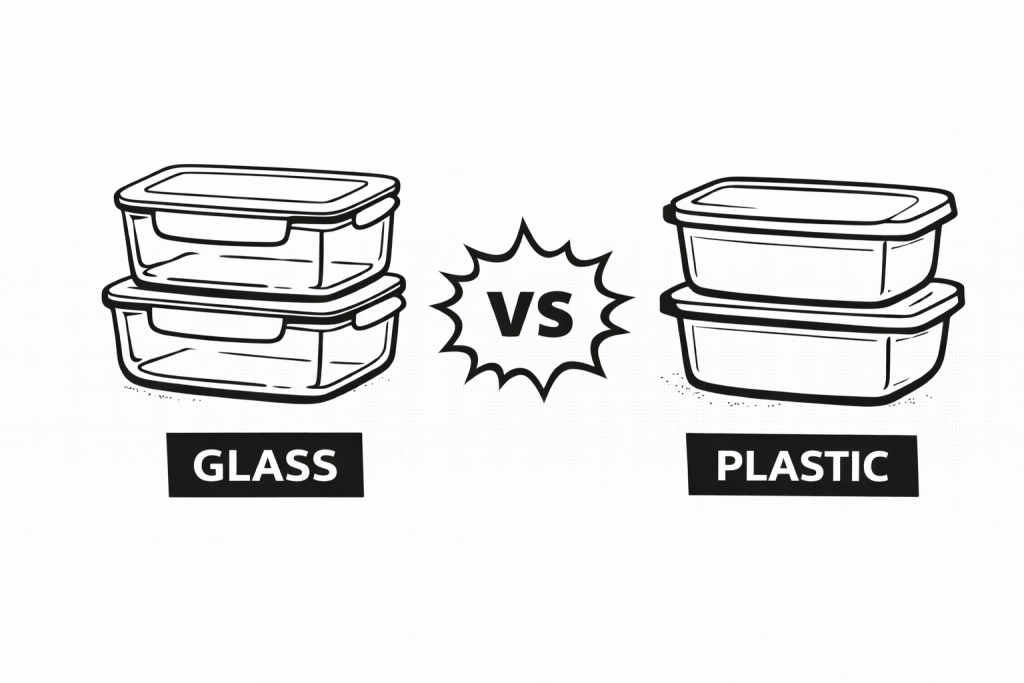
Glass vs Plastic – The Real Differences
The two most common container options are glass and plastic. Both have advantages, but there are clear differences that matter when it comes to freezer meal prep. Understanding these differences will help you choose a container that protects your food and supports long-term use.
Glass
• Non-porous; does not absorb odors or bacteria
• Stain resistant
• Better heat retention during reheating
• Heavier and more durable
• Higher upfront cost
• No concerns about chemical leaching
Plastic
• More porous; may retain odors over time
• Can stain with sauces or oils
• More prone to warping or cracking
• Lightweight and easy to transport
• Lower upfront cost
• Potential material leaching concerns depending on quality
Glass containers typically cost more at first, but they offer long-term durability and performance. They are less likely to need replacement and provide better protection against odor absorption, staining, and freezer burn. Over time, this durability can actually save money by reducing food waste and repeated container purchases.
Plastic containers still have their place — especially for lightweight transport — but for freezer meal prep where quality preservation matters most, glass is often the stronger long-term choice.
⸻
What Makes a Container “Freezer Friendly”
Not all containers are created equal. When choosing one specifically for freezer meal prep, there are key features that make a real difference in performance.
Lid
An airtight lid is essential. It prevents cold air from reaching your food, which reduces moisture loss and helps prevent freezer burn. Look for lids that lock securely into place and include a silicone gasket or seal between the lid and the container. A strong seal protects both texture and flavor over time.
Shape
A freezer-friendly container should be designed with space efficiency in mind. Most freezers are compact and square, so a rounded rectangular shape works best. This shape stacks easily, maximizes storage space, and promotes more even reheating compared to thick, uneven shapes.
Material and Build
Glass is often the optimal material for freezer meals — particularly borosilicate glass. It is durable, resistant to temperature changes, freezer and microwave safe, and non-toxic. Aim for containers that are no more than 2.5 inches deep, with a capacity around 20–24 ounces. This size supports proper portion control and allows food to reheat evenly without forming dense, thick blocks.
Checking these boxes ensures you’re using a container that protects your food, improves reheating, and supports long-term meal prep success.
⸻
Ideal Container Size and Shape for Meal Prep
The size and shape of your container directly impact storage efficiency, reheating performance, and portion control. A rounded rectangular shape is generally the most practical choice. It promotes proper heating, stacks neatly in most freezers, and maximizes limited storage space.
Aim for a container with a capacity of roughly 20–24 ounces. This size makes it easy to fit your protein, starch, and vegetables without overfilling. It naturally supports portion control without requiring extra measuring or thought.
Depth also matters. A container that is no more than 2.5 inches tall allows for more even reheating and reduces the risk of thick, dense portions that heat unevenly. A properly filled container with minimal excess space also limits cold air exposure, helping reduce the likelihood of freezer burn.
Choosing the right size and shape keeps your meals consistent, efficient to store, and easy to reheat.
I use 22oz glass containers with locking lids and a silicone seal. They’re durable, stack well, and protect against air exposure.
View the exact containers I use here.
⸻
Common Container Mistakes
There are countless containers on the market, which can make choosing the right one feel overwhelming. To simplify the process, focus on avoiding these common mistakes:
• Thin, fragile materials that crack under temperature changes
• Lids without a proper seal or locking clasps
• Porous materials that absorb odors and stains
• Odd or bulky shapes that don’t stack efficiently
• Containers that are not labeled freezer- and microwave-safe
Choosing the wrong container can lead to freezer burn, uneven reheating, leaks, and wasted food. Prioritize durability, airtight security, and functional design to avoid preventable problems.
⸻
Are Expensive Containers Worth It?
The short answer is yes — if you’re paying for quality, not gimmicks.
Spending a little more upfront on a well-built container can save you money over time. Durable materials reduce the need for replacements, airtight seals protect your food from freezer burn, and proper structure improves reheating performance. That translates to less food waste, fewer frustrations, and more consistent results.
You don’t need unnecessary features or premium branding. You simply need a container that checks the right boxes: airtight, durable, properly sized, and freezer-safe. When those fundamentals are covered, the investment pays for itself.
⸻
Conclusion
The right container gives you control throughout the freezer meal process. It reduces air exposure, improves storage efficiency, and supports even reheating. Most issues people experience with freezer meals — freezer burn, dryness, wasted food — can often be traced back to poor storage.
Choose your container thoughtfully. When you build your meal prep system on a strong foundation, everything else becomes easier.
Recommended Container
This is the container I personally use, it hits all the specs mentioned above: