Reheating is where many freezer meals succeed or fail. Even well-prepared meals can lose texture and flavor if they’re reheated incorrectly. This guide explains why freezer meals dry out and how to reheat them properly so they stay just as enjoyable as when they were first cooked.
⸻
Introduction
Your meal tasted great when you cooked it and prepped it. You used the right components, froze it properly, and everything seemed set. Then it’s time to eat—and something doesn’t taste right.
Reheating is where many freezer meals fail. The good news is that this is usually an easy fix once you understand what’s happening and how to reheat properly.
⸻
Why Freezer Meals Dry Out When Reheated
A lot is happening when a frozen meal is reheated, and most problems come down to one thing: moisture loss. Dry freezer meals aren’t caused by bad ingredients—they’re caused by how heat is applied.
The most common reasons freezer meals dry out include:
• Reheating for too long, which forces moisture to evaporate
• Reheating uncovered, allowing steam to escape instead of staying with the food
• Uneven heating, where the outside overheats before the center warms through
• Reheating too quickly, which shocks the food and dries it out
In most cases, dryness is the result of speed and excessive heat—not the meal itself. Once you slow the process down and control moisture, reheated freezer meals improve immediately.
⸻
Thawing vs Reheating From Frozen
When it comes time to reheat a freezer meal, you really have two options: reheating from frozen or reheating after thawing. There isn’t a strict rule for which method to use—it mostly depends on your time and planning.
If you’re able to place your meal in the fridge or a cold lunch bag for a few hours before reheating, do it. Thawing first allows the meal to warm more evenly, reducing the chance of an ice-cold center and an overheated exterior. This gentler process helps preserve texture, flavor, and moisture.
Reheating directly from frozen still works and is often the most convenient option. However, it usually requires longer heating times and slightly higher heat, which can lead to some loss of texture or moisture if not done carefully.
The takeaway is simple: if you can thaw first, you’ll get better results. If you can’t, reheating from frozen is still perfectly fine.
⸻
Best Reheating Methods for Freezer Meals
The best method for reheating a freezer meal depends on two things: how much time you have and where you’re reheating your food. Each method can work well when used properly, but they each have different strengths and limitations.
Microwave Reheating
The microwave is the most common and convenient option, especially for work lunches or busy days.
• Fast and widely accessible
• Higher risk of drying out if overheated
• Stirring or rotating the meal when possible improves even heating
Using lower power for a longer time helps prevent moisture loss and uneven heating.
⸻
Oven Reheating
Oven reheating takes more time but provides more even heat, making it a good option when you’re reheating larger portions at home.
• Helps preserve texture
• Requires more time than a microwave
• Best results come from thawing first or reheating while covered
This method works well for casseroles and larger, denser meals.
⸻
Stovetop Reheating
Stovetop reheating is ideal for meals with sauces, broths, or stews.
• Excellent moisture control
• Limited to meals that can be transferred to a pan
• Stir occasionally and use a lid to retain heat and moisture
This method allows you to adjust heat gradually and prevent overcooking.
The most important part of reheating any freezer meal is controlling both the heat level and the speed at which it’s applied. Slower, gentler reheating almost always produces better results than rushing the process.
⸻
How to Keep Moisture In While Reheating
The reheating method you use often comes down to convenience and availability. That part isn’t always in your control. What is in your control is moisture—and moisture is what ultimately makes or breaks a reheated freezer meal.
The good news is that moisture control is simple. Small adjustments during reheating can dramatically improve taste, flavor, and texture.
Sauce as Built-In Protection
Sauce — as explained in Freezer-Friendly Sauces That Lock in Flavor, plays a critical role during reheating. It’s not just a flavor addition—it’s a protective component. Sauce creates a barrier that helps prevent moisture loss while the meal warms, keeping proteins tender and starches from drying out.
Meals that include sauce almost always reheat better than dry, uncoated foods.
Covering Your Meal Matters
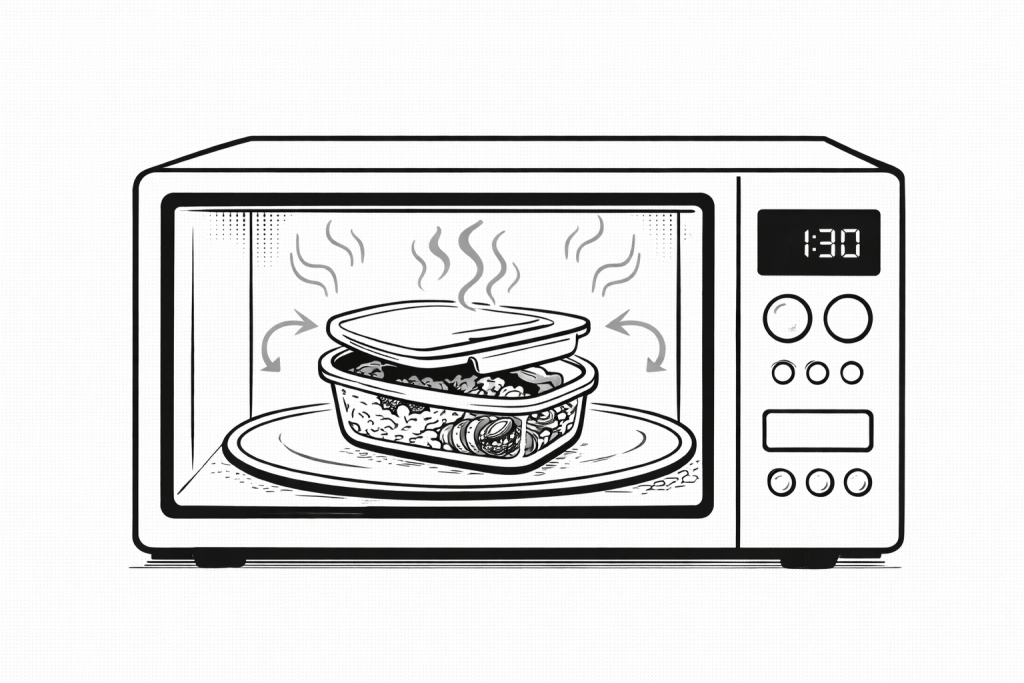
Using a cover during reheating helps trap steam and retain moisture. Starting the reheating process covered allows heat to move into the center of the meal more evenly, reducing the risk of a hot exterior and a cold interior.
As reheating continues, removing the cover gradually allows excess moisture to escape. This gives you control over the final texture instead of leaving it to chance.
Covering also creates a mild pressure effect, helping heat reach the center of the meal more efficiently.
This approach works whether you’re reheating in a microwave, on the stovetop, or in the oven.
⸻
Portion Size and Container Shape Matter
Packing a container with large portions may sound appealing, but it often creates the opposite result during reheating. Larger portions take longer to heat through and are harder to control, which increases the risk of dry edges and cold centers.
For better results, focus on controlled portions that are evenly distributed throughout the container. Spreading food out allows heat to move through the meal more consistently, rather than fighting its way through thick, compact blocks.
Container design also plays an important role, you want to have a container that is designed for freezer meals. A container depth of no more than about 2.5 inches helps prevent uneven heating and makes temperature control much easier. Shallower containers encourage even reheating and reduce the chance of overcooking the outer layers.
Material and shape matter as well. Glass containers reheat evenly and retain heat more consistently, while rounded rectangular shapes allow heat to circulate better than sharp corners. Together, these small choices set you up for a smoother, more reliable reheating process.
These are the containers I personally use, they hit all the recommended specs for freezer meals:
View containers I personally use.
⸻
Common Reheating Mistakes to Avoid
Reheating a freezer meal is a simple process—and one where you control the outcome. Most mistakes come from rushing or overlooking small details. Keeping the following points in mind will help you avoid common issues:
• Control speed and temperature — slower, gentler heat produces better results
• Use a lid or cover to retain moisture during reheating
• Thaw when possible for more even heating
• Use sauce strategically to protect texture and flavor
• Apply portion control to prevent uneven reheating
• Use a proper container that allows heat to circulate evenly
With a little repetition, these habits become second nature and consistently lead to better-tasting reheated meals.
⸻
Conclusion
Reheating is a skill, not luck. It’s something you think about during the cooking and portioning process, long before the meal ever goes into the freezer. It starts with choosing the right container and carries through until the timer goes off and your food is ready to eat.
When reheated properly, freezer meals can be just as satisfying as freshly cooked food.
Looking for the tools behind this system?
View Recommended Tools