Chicken breast is one of the most popular proteins for meal prep — it’s affordable, accessible, and incredibly versatile. The problem is its reputation. When frozen and reheated improperly, it can turn dry and bland. The good news is that this isn’t a freezer problem — it’s a technique problem. With the right preparation, cooking method, slicing strategy, and reheating control, chicken breast can become one of the most reliable proteins in your freezer meal system.
How to Cook Chicken Breast for Freezer Meals (Quick Answer)
To cook chicken breast for freezer meals without drying it out follow these simple guidelines:
- Use even-sized chicken breasts for more consistent cooking
- Season generously or dry brine for 30–60 minutes before cooking
- Pat chicken dry before cooking for better browning
- Cook with controlled heat and avoid overcooking
- Brown the outside and let carryover heat finish the job
- Slice against the grain into smaller pieces before freezing
- Add a light sauce to protect moisture and flavor
- Cool fully before freezing in airtight containers
- Reheat gently with the lid partially on to trap steam
With proper cooking, slicing, sauce, and reheating strategy, it can be one of the best proteins for freezer meal prep.
Disclosure: This article may contain affiliate links. As an Amazon Associate, I earn from qualifying purchases at no extra cost to you.
Chicken Breast for Freezer Meals
Chicken breast is popular for a reason — it’s affordable, widely available, and extremely versatile. The problem is its reputation. When frozen and reheated improperly, it can turn dry, bland, and disappointing.
The good news? That outcome isn’t inevitable. Dry chicken breast isn’t a freezer problem — it’s a technique problem. With the right preparation, cooking method, and reheating strategy, chicken breast can be one of the most reliable proteins in your freezer meal rotation.
Want freezer meals that actually reheat properly? Get the free blueprint.
Why Chicken Breast Dries Out So Easily
Even before technique comes into play, chicken breast is naturally lean. It contains very little fat, which means it has less built-in protection against moisture loss.
When exposed to heat, the muscle fibers in chicken breast tighten and contract. The tighter they contract, the more moisture is pushed out. If cooked too aggressively or for too long, that moisture is gone for good.
Now add the freezer process. The chicken is cooked once, cooled, frozen, and reheated again. Reheating reactivates those tightened fibers, amplifying any dryness that already occurred during the initial cook.
Lean protein plus poor technique equals dry results. But when handled intentionally, chicken breast doesn’t have to suffer from that reputation.
Buying the Right Chicken Breast
Choosing the right product from the start makes everything easier later.
When shopping for freezer meals, buying in bulk is smart. It allows you to prepare multiple portions at once, reduces cost per serving, and keeps your process efficient.
Look for consistently sized chicken breasts. Even thickness means even cooking, which gives you far more control over texture and moisture retention.
Whenever possible, buy fresh rather than previously frozen chicken. Starting with fresh protein limits the number of freeze–thaw cycles the meat goes through, helping preserve overall quality and structure.
Finally, avoid pre-butterflied or overly thin-cut breasts. Thinner cuts cook too quickly and are easier to overcook, especially when preparing large batches. Buying whole breasts gives you full control over how they are portioned and sliced for freezing.
Prep Before Cooking (Critical Step)
The small details in your prep work are what separate dry, bland chicken from freezer-ready success.
Always start with fully thawed chicken. Cooking partially frozen meat leads to uneven heat distribution and increases the risk of overcooking the exterior while the center catches up.
Before cooking, season generously or apply a quick dry brine. Even 30–60 minutes with salt allows seasoning to penetrate the surface and helps the meat retain moisture during cooking. This step is especially important for freezer meals, where flavor can dull slightly after freezing and reheating.
Pat the chicken completely dry before applying heat. Moisture on the surface prevents proper browning. A dry exterior allows the Maillard reaction to occur — the chemical process responsible for developing a deep, flavorful crust.
Intentional prep work builds structure. Structure protects moisture. And moisture control is what keeps chicken breast reliable through the freezer and reheating process.
Cooking Methods That Work Best for Freezer Meals
There are many ways to cook chicken breast, but certain methods work better when the goal is freezing and reheating without drying it out.
High Heat Sear + Finish
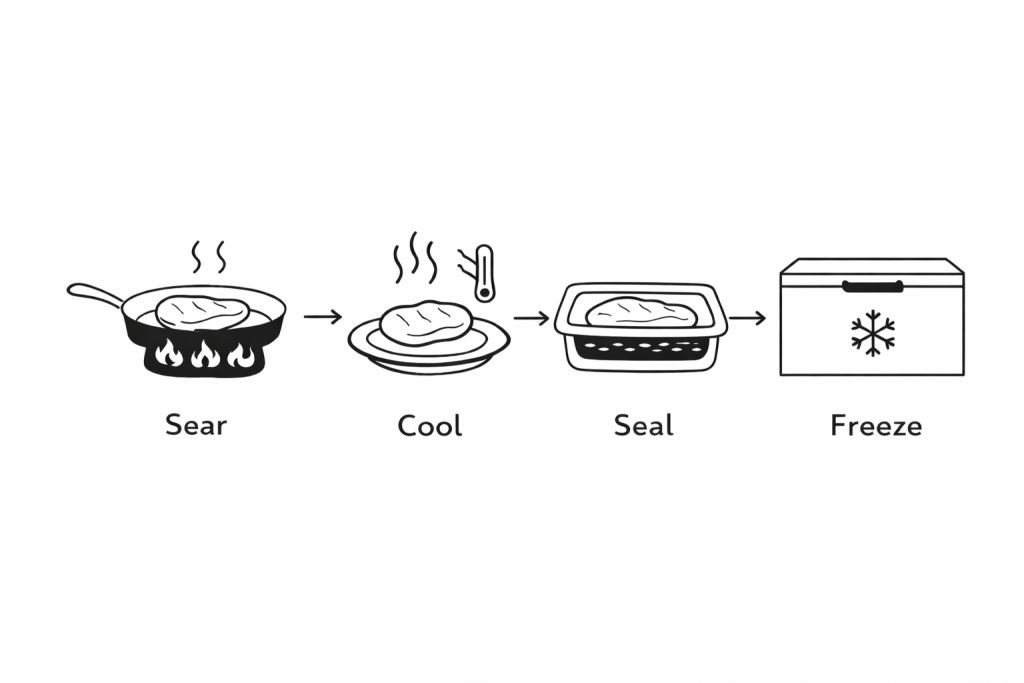
Start with a high-heat sear to develop a flavorful crust. Once browned, reduce the heat or transfer to the oven to finish gently. This creates texture while preventing over-tightening of the interior. If batch cooking, remember not to over crowd the pan.
Oven Bake (Controlled Temperature)
Baking at 375–400°F is one of the most reliable batch methods. It allows for even cooking and consistent results. Pull the chicken slightly before full doneness and allow carryover heat to finish the cook.
Poaching (Underrated Option)
Poaching uses gentle heat in liquid, naturally retaining moisture. It’s ideal for shredded chicken and sauce-based meals.
Grilling
Grilling adds additional flavor and texture. Monitor heat carefully to avoid overcooking.
No matter the method, overcooking is the real enemy. Control heat and remember the chicken will be reheated later.
Slice Strategy Matters
How you cut your chicken breast before freezing makes a major difference when it’s time to reheat.
Never freeze thick, whole chicken breasts. When reheating, it takes much longer for the center to warm through. This forces the outer layers to stay under heat for too long, essentially cooking from the outside in. The result is a tough, rubbery exterior with most of the moisture already gone by the time the middle is hot.
Instead, slice the chicken against the grain. Cutting across the muscle fibers shortens them, making each bite more tender after reheating.
Smaller, uniform pieces heat more evenly and absorb sauce more effectively. Good slicing is built-in moisture control.
Pairing Chicken Breast with Sauce
Because chicken breast is lean, it benefits from structure — and sauce provides it.
Adding sauce before freezing creates a protective layer that limits air exposure and helps reduce the risk of freezer burn. It also preserves flavor through freezing and reheating.
Thicker sauces tend to cling to the surface and provide stronger protection. Thinner sauces still work well but may be absorbed more quickly by starches like rice.
The key is intentional application and a sauce made for freezing. Lightly coat the chicken and add a controlled amount of additional sauce if needed.
For lean proteins, sauce isn’t optional — it’s structural.
Stop guessing. Build freezer meals that freeze and reheat perfectly.
Freezing & Reheating Strategy
Allow chicken to cool completely before freezing. Cooling reduces trapped condensation, which helps prevent ice crystals and texture loss.
Once cooled, slice, apply sauce, portion properly, seal in an airtight container, and freeze. If this process is done properly, your cooked chicken should last up to 6 months in the freezer.
These are the containers I personally use, they hit all the recommended specs for freezer meals.
When reheating, thaw when possible to reduce time under heat. Reheat covered first to trap moisture, then remove the cover toward the end to fine-tune texture.
Freezing and reheating are part of the cooking process — not separate from it.
Common Chicken Breast Mistakes
Avoid these common mistakes:
• Overcooking “just to be safe”
• Freezing whole cooked breasts
• Skipping sauce or under-seasoning
• Reheating without moisture control
• Buying previously frozen chicken
• Freezing while still hot
Most dry chicken problems aren’t caused by the freezer — they’re caused by small oversights in preparation.
Final Thoughts
Chicken breast remains a classic protein for a reason. It’s affordable, accessible, and adaptable to countless meals.
When a freezer meal turns out dry, the issue isn’t the ingredient — it’s the technique. Lean protein requires structure, moisture control, and intentional preparation.
When handled properly, chicken breast becomes one of the most reliable and versatile proteins in your freezer system.
Control the process, and the results follow.
Looking for the tools behind this system?
View Recommended Tools
About the Author
Here at Cook Once Eat Later we share freezer meal recipes, meal prep systems, and practical freezing guides designed to help busy people save time without sacrificing flavor. Our focus is helping meals retain their texture, moisture, and quality long after they’ve been frozen.
Follow Cook Once Eat Later on Instagram for freezer meal tips, recipes, and meal prep inspiration.
FAQ
Can cooked chicken breast be frozen for meal prep?
Yes. Cooked chicken breast freezes well when it is prepared properly. The key is avoiding overcooking, slicing it into smaller pieces before freezing, and pairing it with sauce to help protect moisture during reheating.
Why does chicken breast dry out in freezer meals?
Chicken breast is naturally lean and contains very little fat. When it is overcooked or reheated too aggressively, the muscle fibers tighten and push moisture out of the meat. This can make it feel dry or rubbery.
Should chicken breast be sliced before freezing?
Yes. Slicing chicken breast into strips or bite-sized pieces before freezing helps it reheat more evenly and prevents the outside from drying out while the center warms through.
What is the best cooking method for chicken breast used in freezer meals?
Methods that allow controlled cooking tend to work best. Searing and finishing gently, baking in the oven at moderate temperatures, or poaching are all reliable ways to cook chicken breast while preserving moisture.
Does sauce help chicken breast freeze better?
Yes. Sauce helps protect the chicken from air exposure and moisture loss during freezing and reheating. Lean proteins like chicken breast benefit especially from having a sauce layer.
Is it better to freeze chicken breast whole or cut?
Cutting the chicken into smaller pieces before freezing usually produces better results. Smaller pieces reheat faster and more evenly, which reduces the risk of dryness.
Should chicken breast be thawed before reheating?
Whenever possible, thawing chicken in the refrigerator before reheating helps it warm more evenly and reduces the time it spends under heat. However, it can still be reheated directly from frozen if heat is applied carefully.
How long does cooked chicken breast last in the freezer?
For best quality, cooked chicken breast is usually best eaten within 3–4 months when stored properly in airtight containers. It may remain safe longer, but texture and flavor gradually decline over time.