Learn how to shop for freezer meal prep the right way. Discover which proteins, starches, vegetables, and sauces freeze well so you save money and avoid wasted meals.
How to Shop for Freezer Meal Prep (Quick Answer)
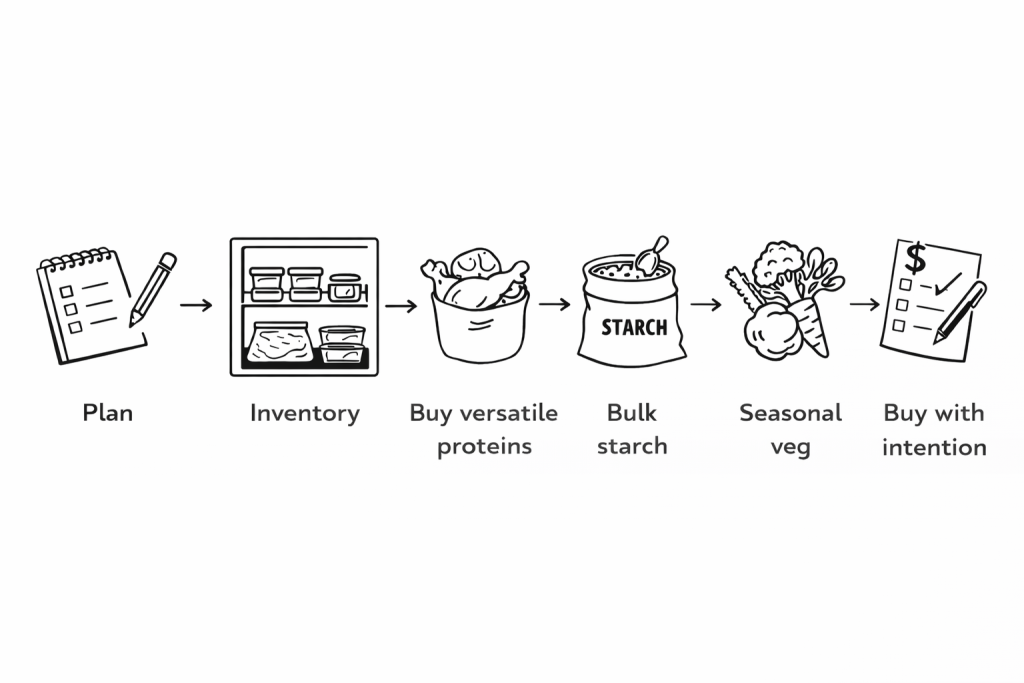
Shopping for freezer meal prep is easy if you follow a few simple guidelines:
- Buy ingredients that freeze and reheat well
- Think in components: protein, starch, vegetables, sauce
- Buy proteins in bulk when on sale
- Choose versatile starches like rice or potatoes
- Pick vegetables that hold texture after freezing
- Buy enough for 3–5 meals at once
- Avoid foods that spoil fast or reheat poorly
- Plan meals before shopping to reduce waste
Disclosure: This article may contain affiliate links. As an Amazon Associate, I earn from qualifying purchases at no extra cost to you.
Shopping for Freezer Meal Prep
Freezer meals succeed or fail at the grocery store. Think of your grocery run as the foundation of your freezer meal prep. Buying the wrong ingredients leads to wasted food, time, and money before you even start cooking.
This guide will show you how to shop specifically for freezer meal prepping, so the meals you make freeze well, reheat properly, and are actually enjoyable to eat later.
If you’re new to freezer meals, it helps to understand how to freeze meals properly so they still taste good before you start shopping.
Want a complete freezer meal system? Get the free blueprint.
Think in Components Instead of Recipes
Shopping for freezer meal prepping is best done by thinking in components, not individual recipes.
Most freezer-friendly meals can be broken down into four basic parts:
• Protein
• Starch
• Vegetables
• Sauce
Going to the grocery store with a clear understanding of which components freeze well, reheat well, and mix well together gives you flexibility. Instead of shopping for one specific recipe, you can buy ingredients that work across multiple meals and adjust based on what’s available or on sale.
This approach saves money and makes freezer meal prepping far more sustainable long term.
Best Proteins to Buy for Freezer Meal Prep
Proteins are typically the highest expense when shopping for freezer meals, so choosing the right ones matters. Some proteins freeze and reheat better than others, and these should be your go-to options when planning freezer meals.
Proteins that generally freeze well include:
• Ground meats
• Chicken thighs
• Beef steaks (various cuts)
• Shrimp
That said, there are exceptions, and they mostly come down to prepping and cooking technique.
Lean proteins like chicken breasts and low-fat beef cuts can still work very well if handled properly:
• Chicken breasts are best cut into bite-sized chunks before cooking or sliced into strips after cooking
• Lean beef cuts should be sliced thin, against the grain, and seared over high heat
• Always pat proteins dry before cooking — this helps develop a better crust, locking in moisture and flavour
Lastly, whenever possible, buy proteins in bulk. This lowers cost per serving and makes it easier to cook once and portion out six or more freezer meals at a time.
This same component-based approach is used in our guide to freezer meals that freeze well without losing flavour.
Best Starches for Freezer Meals
Starches are one of the most affordable and forgiving components of freezer meal prep. They’re easy to control during cooking, freezing, and reheating, and most options will work well if you stick to the basics.
For versatility and cost efficiency, focus on starches that are neutral, reliable, and widely available.
Starches that consistently freeze and reheat well include:
• Rice (jasmine or basmati)
• Potatoes (sweet potatoes or Yukon Gold)
• Pasta (spaghetti or linguine)
• Quinoa
When shopping for rice, jasmine and basmati are ideal choices. They can be purchased in bulk, pair well with almost any protein or sauce, and hold their texture better than softer rice varieties when reheated.
For pasta, long noodles like spaghetti and linguine tend to perform better than thicker shapes like penne. Heavier pasta can absorb too much moisture during freezing and reheating, which often leads to breakage or a gummy texture.
Potatoes are extremely freezer-friendly when prepared correctly. Mashed, roasted, or halved potatoes all work well, especially when paired with a sauce or a bit of butter. Adding fat helps preserve moisture and improves flavour after reheating.
Best Vegetables for Freezer Meal Prep (and What to Avoid)
Vegetables can feel like the trickiest part of freezer meals, but they don’t have to be. Choosing the right vegetables keeps the process simple and avoids texture issues after freezing and reheating.
When shopping for freezer meals, focus on vegetables that hold their structure and don’t release excessive water. For a complete guide on freezing vegetables check out “How to Keep Vegetables From Getting Mushy in Freezer Meals“.
Vegetables that freeze and reheat well:
• Broccoli
• Carrots
• Peppers
• Onions
• Green beans
• Peas
• Corn
• Asparagus
• Kale
• Beets
Vegetables to avoid for freezer meals:
• Lettuce
• Cucumber
• Celery
• Zucchini
• Raw tomatoes
Following this simple guideline makes shopping much easier. Remember that your components are interchangeable, so prioritize vegetables that look fresh and are priced well rather than forcing specific recipes.
Want freezer meals that actually reheat properly? Get the free blueprint?
Sauces, Seasonings, and “Freezer Insurance”
Sauce is one of the most important elements of a successful freezer meal. It adds flavour, preserves moisture, and helps tie all of your components together.
The cooking, freezing, and reheating process can pull moisture and flavour out of your food. Because of this, it’s a good idea to season slightly heavier than you normally would. A well-made sauce acts as freezer insurance, helping ensure your meal still tastes great after reheating.
When it comes to sauces, you have two options: buying them or making them yourself.
Making your own sauce has several advantages:
• You control sugars, additives, and ingredients
• You know everything is freezer-friendly
• It’s usually more cost-effective
• Sauces can be made in bulk for multiple meals
Store-bought sauces can absolutely work in a pinch, and there’s nothing wrong with using them when needed. That said, making your own sauces is recommended when you have the time, as it gives you more control and better results long term.
Portion Planning While Shopping
Portion planning starts at the grocery store, not in the kitchen. When shopping for freezer meal prep, think in terms of multiple meals, not a single dinner.
A simple rule to follow:
• Shop for 3–5 meals, not just one
• Buy ingredients in multiples, especially proteins
• Avoid buying amounts that lead to partial meals or waste
When you buy an ingredient, assume you’re cooking six or more meals with it. If you want leftovers for the fridge or freezer beyond that, buy extra. This mindset is especially important when purchasing proteins, where running short can throw off an entire prep session.
Starches are generally easy to shop for because most store well before cooking. Rice and quinoa last a long time dry, and potatoes can be purchased individually or in bags depending on how many meals you plan to make.
Vegetables require a bit more intention. Think about how much you typically include in one meal and buy just slightly more than needed. This helps prevent food from going bad while still giving you enough flexibility when portioning.
What NOT to Buy for Freezer Meal Prep
Leaving the grocery store with the right ingredients is just as much about what you don’t buy.
Avoid purchasing:
• Dairy toppings meant to be added fresh (like sour cream)
• Foods that don’t reheat well
• Items that are close to their expiration date
• “Just enough” of a key component
There’s nothing more frustrating than getting home, cooking, and realizing a problem could have been avoided at the grocery store. A little planning up front prevents wasted time, money, and effort later.
Conclusion
Freezer meal prep starts long before you turn on the stove. Knowing what to buy and leaving the grocery store with the right ingredients sets you up for success from the beginning.
Shopping with intention leads to:
• Less waste
• Better-tasting meals
• Less frustration
When you shop correctly, everything else becomes easier. Freezer meal prep isn’t just about cooking ahead — it’s about planning ahead.
Looking for the tools behind this system?
View Recommended Tools
About the Author
Here at Cook Once Eat Later we share freezer meal recipes, meal prep systems, and practical freezing guides designed to help busy people save time without sacrificing flavor. Our focus is helping meals retain their texture, moisture, and quality long after they’ve been frozen.
Follow Cook Once Eat Later on Instagram for freezer meal tips, recipes, and meal prep inspiration.
FAQ
What foods should you buy for freezer meal prep?
The best foods for freezer meal prep are ingredients that hold their texture and flavor during freezing and reheating. These usually include proteins, starches, vegetables, and sauces that work well together in complete meals. Ground meats, chicken thighs, rice, potatoes, pasta, and sturdy vegetables like broccoli or carrots are common freezer-friendly options.
Is it cheaper to make freezer meals at home?
Yes. Homemade freezer meals are usually much cheaper than store-bought versions because you can buy ingredients in bulk and portion them yourself. Planning several meals at once also helps reduce food waste and makes better use of ingredients that might otherwise go unused.
How many meals should you shop for at once?
Most people find it easiest to shop for 3–5 freezer meals at a time. This keeps grocery costs manageable while still allowing you to cook multiple portions that can be stored for later.
What vegetables should you avoid buying for freezer meals?
Vegetables with very high water content tend to lose their texture when frozen. It’s best to avoid buying vegetables like:
• Lettuce
• Cucumbers
• Celery
• Zucchini
• Raw tomatoes
These vegetables are better added fresh after reheating.
Can sauces be frozen with meals?
Yes. Sauces actually help freezer meals perform better. They add flavor, help preserve moisture, and protect food from drying out during freezing and reheating. A well positioned sauce can also help save your components from freezer burn.
Should you buy proteins in bulk for freezer meals?
Buying proteins in bulk is often the most cost-effective approach for freezer meal prepping. Larger packages typically lower the cost per serving and make it easier to cook multiple meals during one prep session.
How do you prevent wasting food when grocery shopping for freezer meals?
The best way to prevent waste is to shop with component-based planning. Instead of buying ingredients for one specific recipe, purchase proteins, starches, vegetables, and sauces that can be mixed and matched across several meals.
Do you need to buy special ingredients for freezer meal prep?
No. Most freezer meals can be made using everyday grocery store ingredients. The key is choosing foods that freeze well and avoiding ingredients that lose texture or flavor after freezing.