
By Cook Once. Eat Later. • Updated August 24, 2026
Freezing rice for meal prep is simple—but getting it to reheat without drying out is where most people struggle. If your rice turns dry, hard, or mushy after freezing, it’s not random. It’s caused by how starch and moisture change during cooking, freezing, and reheating. Once you understand what’s happening, you can control the process and consistently get rice that reheats soft, structured, and just as good as when it was first cooked.
How to Freeze Rice for Meal Prep (Quick Answer)
If you want to freeze rice without it drying out, follow these key steps:
• Rinse rice before cooking to remove excess starch
• Cook until just tender (not overcooked)
• Let rice cool completely before freezing
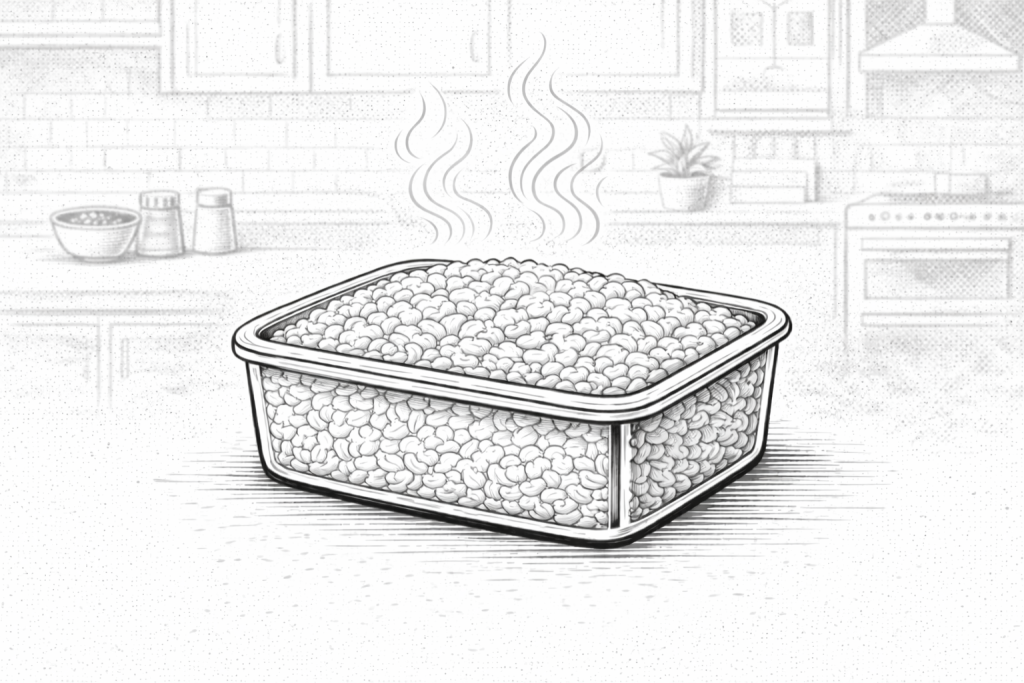
• Store in an airtight container to prevent moisture loss
• Reheat with the lid partially on to recreate steam
Rice becomes dry after freezing due to moisture loss and starch changes (retrogradation). Controlling moisture during cooking, freezing, and reheating prevents this.
Disclosure: This article may contain affiliate links. As an Amazon Associate, I earn from qualifying purchases at no extra cost to you.
Freezing Rice for Freezer Meal Prep
Rice is one of the most common starches used in freezer meals. It’s affordable, versatile, and pairs well with almost any protein or vegetable, making it an easy base for meal prep.
The problem many people run into is that frozen rice often ends up dry, bland, or mushy by the time it’s reheated. This happens because of rice’s high starch content and the way that starch behaves when it is cooked, frozen, and reheated.
Understanding what happens to rice during these stages makes it much easier to prepare freezer meals that reheat with the same texture and flavor as freshly cooked rice.
What Rice Is Made Of (Why It Reacts to Freezing)
Using rice successfully in freezer meals starts with understanding what rice is made of and how those components react to cooking, freezing, and reheating.
Rice is mostly starch, which makes up about 70–80% of the grain. When rice cooks, the starch absorbs water and swells in a process called gelatinization. This is what transforms dry rice into the soft grains we eat.
Rice starch is made of two main molecules: amylose and amylopectin.
Amylose forms long, straight chains, while amylopectin forms highly branched structures. The ratio of these two starches influences the texture of the cooked rice.
Rice varieties with higher amylose content tend to cook into firmer, more separate grains, while varieties with more amylopectin cook into softer and stickier rice.
These starch structures are also the reason rice behaves differently once it has been frozen and reheated.
What Happens When Rice Freezes
When rice is frozen, some of the starch begins to change through a process called retrogradation. During retrogradation, the starch molecules start to reorganize and form tighter crystalline structures through hydrogen bonding. This gives the rice a firmer and slightly more fibrous texture that remains even after reheating.
This process can increase the amount of resistant starch in rice, which is sometimes considered a nutritional benefit. However, in the context of freezer meals, these structural changes can also contribute to rice feeling dry, firm, or stale after reheating.
Freezing also introduces another factor: ice crystal formation. As rice freezes, water inside the grains expands and forms ice crystals. These crystals can damage the delicate structure of the cooked rice, leading to moisture loss and texture changes when the rice is reheated.
Freezing essentially accelerates these changes by pushing the starch molecules to reorganize more quickly than they would during normal storage.
The key to managing these processes is controlling how rice is cooked, cooled, and frozen. When handled properly, rice can retain much of the texture and moisture it had when it was first cooked.
Why Rice Dries Out in Freezer Meals
Rice usually dries out in freezer meals because something went wrong during the cooking, freezing, or reheating process.
One common cause is undercooking the rice too aggressively. While slightly undercooking rice can help during the freezer meal process—because reheating finishes the cooking—severely undercooked rice will remain hard and grainy even after reheating. The starch inside the grain simply never had enough time to fully gelatinize during the initial cook.
Another cause is air exposure during freezing. If rice is stored in a low-quality or poorly sealed container, cold freezer air can reach the surface of the food. This exposure slowly pulls moisture out of the rice and can lead to dehydration or freezer burn. Using a properly sealed container helps protect the rice from this moisture loss.
View the exact container I use here.
Finally, improper reheating techniques can dry rice out as well. Reheating for too long or using excessive heat causes moisture to evaporate from the grains. Because rice has already gone through one full cooking cycle, aggressive reheating can quickly push it past the point where it retains its original texture.
In most cases, dry rice is not caused by freezing itself. It is the result of small mistakes in how the rice was cooked, stored, or reheated.
How to Freeze Rice Properly
Freezing rice successfully comes down to controlling how it is prepared, cooked, and stored.
The first step begins during preparation. Before cooking, rice should always be rinsed thoroughly. Washing the rice removes excess surface starch that can otherwise create a thick coating on the grains. If that starch is left behind, the rice is more likely to clump together and develop a sticky or mushy texture after freezing and reheating.
During cooking, it is important to avoid overcooking the rice. Overcooked rice has already absorbed as much water as it can and has a weakened structure. Once frozen and reheated, these grains often break down further and lose their texture. Cooking the rice until it is just tender gives it enough structure to withstand freezing and reheating.
Once the rice has been cooked properly, the next priority is controlling how it cools and freezes. Allow the rice to cool before storing it so excess steam can escape. Cooling the rice in a large bowl or spread out on a tray helps release trapped moisture that would otherwise form ice crystals in the freezer.
After cooling, portion the rice into a proper airtight container along with the rest of the meal. Adding a sauce or another moist component on top of the rice can help protect it during freezing by creating a barrier that slows moisture loss.
View the exact container I use here.
Finally, place the container toward the back of the freezer where temperatures are most stable. Freezing the meal quickly helps preserve the rice’s structure and reduces the formation of large ice crystals.
When rice is washed, cooked, cooled, stored, and frozen intentionally, it retains far more of its original moisture and texture when reheated.
Pro Tip
Rice can also be frozen when used in a one pot meal. This works by adding the rice into the meal with broth and all of the meal ingredients. The natural starches from the rice will create a sauce that will coat your meal as the rice cooks and the broth reduces. This protects your rice when freezing and reheating.
Click the article link below for an example.
One Pot Smoked Sausage and Rice Recipe (Easy, Freezer-Friendly)
Reheating Rice Without Drying It Out
Reheating rice without drying it out is simple when the rice has been prepared and frozen properly. At this stage, success comes down to technique.
Rice is originally cooked using steam, and that same principle can be used again during reheating. When reheating your meal, use the lid to your advantage. Leaving the lid partially on during the first half of the reheating process allows steam to develop inside the container. This creates controlled moisture and gentle pressure, helping heat move through the rice while preventing it from drying out.
About halfway through reheating, remove the lid to release excess steam and moisture. This allows you to finish heating the meal without the rice becoming overly wet or soggy.
Using this simple lid-on, lid-off approach recreates the steaming environment rice was originally cooked in, allowing it to regain moisture and reheat with a softer, more natural texture.
Stop guessing. Build freezer meals that freeze and reheat perfectly.
Best Rice Types for Freezer Meals
The best rice for freezer meals depends on both the texture of the rice and how it will be used in the meal.
Jasmine rice is one of the most reliable options for freezer meals. Its natural texture sits in a balanced middle ground—it is not overly dry and separate like some long-grain varieties, but it also is not overly creamy or sticky. This balance makes jasmine rice versatile and easier to control when freezing and reheating.
Short-grain rice varieties tend to contain more amylopectin, which gives them their creamy and sticky texture. While this can work well for dishes like risotto, it can sometimes lead to a softer or mushier texture after freezing and reheating.
Very long-grain rice varieties tend to cook into very dry and separate grains. While they hold structure well, they can sometimes feel overly dry when reheated as part of a freezer meal.
In most cases, the success of frozen rice comes down less to the variety and more to the technique used throughout the freezer meal process.
Final Thoughts
Rice doesn’t fail because it can’t be frozen—it fails because it isn’t frozen the right way.
When you understand how rice behaves and take control of the cooking, cooling, freezing, and reheating process, rice can freeze and reheat well with a long freezer life.
Like many components in a freezer meal, success comes down to technique. When moisture, structure, and heat are managed intentionally, rice can retain much of the texture and flavor it had when it was first cooked.
With the right preparation and control, rice becomes one of the most reliable starches you can use in freezer meals.
Looking for the tools behind this system?
View Recommended Tools
About the Author
Here at Cook Once Eat Later we share freezer meal recipes, meal prep systems, and practical freezing guides designed to help busy people save time without sacrificing flavor. Our focus is helping meals retain their texture, moisture, and quality long after they’ve been frozen.
Follow Cook Once Eat Later on Instagram for freezer meal tips, recipes, and meal prep inspiration.
FAQ
Can you freeze cooked rice for freezer meals?
Yes. Cooked rice freezes very well when it is prepared and stored properly. Rinsing the rice before cooking, cooling it completely, and storing it in an airtight container helps maintain texture and moisture during freezing and reheating.
Why does rice get dry after freezing?
Rice dries out after freezing when moisture is lost during storage or reheating. This can happen if the rice is overcooked, exposed to air in a poorly sealed container, or reheated for too long.
What is the best rice for freezer meals?
Jasmine rice is often one of the best options because it has a balanced texture that holds up well during freezing and reheating. Other rice varieties can work as well, but technique during cooking and freezing is more important than the specific variety.
How long can cooked rice stay in the freezer?
Cooked rice generally maintains its best texture and flavor for about 3–4 months in the freezer when stored in an airtight container.
How do you reheat frozen rice without drying it out?
Reheat frozen rice with the lid partially on to allow steam to build inside the container. This helps restore moisture. Removing the lid near the end of reheating allows excess steam to escape and prevents the rice from becoming soggy.