
By Cook Once. Eat Later. • Updated August 24, 2026
Potatoes are one of the best freezer meal ingredients, but many people end up with grainy, watery, or disappointing texture after reheating. The good news is that potatoes freeze very well when prepared properly. In this guide, you’ll learn how to freeze potatoes without them turning grainy, which potatoes work best, and how to reheat them so they stay smooth, flavorful, and reliable for meal prep.
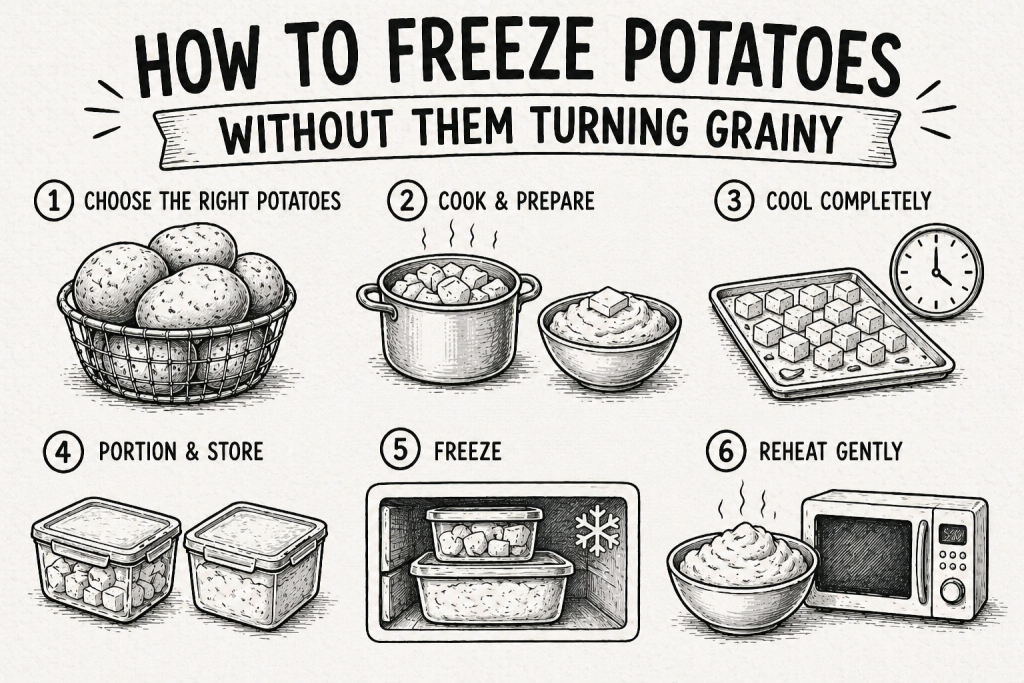
How to Freeze Potatoes Without Them Turning Grainy (Quick Answer)
- Freeze potatoes cooked, not raw
- Let them cool completely first
- Add butter, oil, milk, or sauce for moisture
- Use airtight containers
- Freeze in even portions
- Best potatoes for freezing:
- Russet for mashed potatoes
- Yukon Gold for casseroles and sliced dishes
- Sweet potatoes for smooth texture
- Reheat gently with the lid partially on
Potatoes turn grainy when ice crystals damage texture and starches firm up. Cooking first and controlling moisture helps prevent this.
Disclosure: This article may contain affiliate links. As an Amazon Associate, I earn from qualifying purchases at no extra cost to you.
Potatoes for Freezer Meal Prep
Potatoes are a freezer meal staple. They’re affordable, versatile, and work in almost any meal.
The problem is texture.
Potatoes only freeze well when the process is done correctly. Without the right preparation, they can turn grainy, watery, or unpleasant after reheating.
The good news is that this is completely preventable.
Once you understand what causes the texture change, you can control it.
Why Potatoes Turn Grainy After Freezing
Potatoes turn grainy after freezing because of their high water content.
A potato is roughly 70–80% water. When that water freezes, it forms ice crystals. These crystals expand and damage the cell walls inside the potato.
When the potato is reheated, that structural damage shows up as a grainy or mealy texture.
There’s a second factor at play: starch retrogradation.
Potatoes contain two types of starch — amylose and amylopectin. As potatoes cool, these starches reorganize into a more rigid, crystalline structure. This process is called retrogradation.
Retrogradation causes the potato to become firmer and drier over time, especially after freezing and reheating.
Together, ice crystal damage and starch retrogradation are what create the grainy texture most people experience.
Why Raw Potatoes Freeze Poorly
Raw potatoes freeze poorly because they lack control.
When potatoes are cooked, you control moisture, structure, and enzyme activity. Cooking stabilizes the potato and prepares it for freezing.
Raw potatoes don’t have that protection.
Enzymes remain active, which leads to browning and texture breakdown. At the same time, the high water content freezes uncontrollably, creating excessive ice crystal damage.
The result is a potato that becomes soft, watery, and discolored after thawing.
Raw potatoes are unstable and not suitable for freezing.
Best Potatoes for Freezer Meals
The best potatoes for freezer meals depend on what you’re trying to make. Broadly, potatoes fall into two categories: starchy and waxy, and each behaves very differently in the freezer.
For starchy potatoes, russets are your best option. They have a lower water content and higher starch content, which makes them ideal for mashing and baking. That lower water content helps them hold up better after freezing, and when you combine them with cream or fat, it reduces the risk of a grainy texture when reheated.
Waxy potatoes, like Yukon Gold, have a higher water content and less starch than russets. Because of that, they hold their shape better, making them a better fit for dishes where structure matters—like scalloped potatoes or casseroles.
From experience, one of the best alternatives is the sweet potato. It has a naturally dense texture that stays smooth and silky after freezing, thanks to its lower water content and higher starch and sugar levels.
Preparing Potatoes Before Freezing (Critical Step)
Preparing potatoes before freezing is the most critical step in getting the right texture at the end of the freezer meal cycle. No matter the method you’re using, a few key things happen when potatoes are cooked.
Cooking stops enzyme activity, which prevents browning and slows down breakdown over time. It also helps remove some of the internal moisture that would otherwise freeze into ice crystals and damage the structure of the potato. This is what leads to that grainy or watery texture after reheating. Cooking, in short, helps stabilize the potato.
Adding fats like butter or milk further protects the texture. This is especially important for mashed or baked-style potatoes, where fat helps create a smoother consistency and prevents graininess after freezing and reheating.
If you’re roasting or frying potatoes, soaking them in water beforehand can help improve the final texture. This removes excess surface starch, allowing them to crisp up better and hold a more structured texture through the freezing process.
Freezing Potatoes Properly
Freezing potatoes properly is a simple process if you follow a few key steps and understand what’s happening beneath the surface—mainly retrogradation and ice crystal formation.
First, make sure your potatoes are fully cooled before freezing. Cooling reduces excess moisture and allows them to freeze more quickly and evenly. This is important because faster freezing helps preserve the structure of the potato.
Starches naturally go through a process called retrogradation, where they firm up over time (similar to bread going stale). At the same time, water inside the potato forms ice crystals. If freezing happens slowly, those ice crystals grow larger and cause more structural damage, leading to poor texture when reheated.
When portioning your potatoes, use airtight containers that limit exposure to cold air. This helps prevent freezer burn and extends shelf life while protecting texture.
View the exact container I use here.
It’s also important to distribute your potatoes evenly in the container for consistent reheating. For example, with mashed potatoes, pressing small craters or grooves into the surface allows heat to penetrate more evenly, reducing cold spots.
Finally, use fats or sauces wherever possible. These act as a protective barrier, helping retain moisture and maintain a smoother texture through freezing and reheating.
Reheating Frozen Potatoes
Reheating your potatoes is simple if you keep in mind moisture and density.
Potatoes are dense, so they require more time to heat through. The issue is that longer reheating can affect the other components of your meal and cause them to lose texture.
To manage this, avoid packing your potatoes too tightly. For mashed potatoes, press small indentations into the surface. This helps heat distribute more evenly and prevents cold spots.
You can also control moisture during reheating.
Start by leaving the lid partially on. This creates steam, which helps warm the potatoes evenly and prevents them from drying out. Part way through, remove the lid, stir, and continue reheating uncovered. This allows excess moisture to escape and helps bring the texture back into balance.
Stop guessing. Build freezer meals that freeze and reheat perfectly.
Common Potato Freezing Mistakes
To get consistent results, avoid these common mistakes:
• Freezing raw potatoes
• Skipping blanching or cooking
• Freezing potatoes while still hot
• Forgetting to use fats like butter or oil
• Using poor or non-airtight containers
• Reheating too aggressively
These mistakes lead to freezer burn, large ice crystals, uneven reheating, and poor texture.
Final Thoughts
Potatoes don’t fail because they aren’t meant to be frozen.
They fail because of poor execution.
When you control preparation, moisture, freezing, and reheating, potatoes become a reliable part of your freezer meal system.
Looking for the tools behind this system?
View Recommended Tools
About the Author
Here at Cook Once Eat Later we share freezer meal recipes, meal prep systems, and practical freezing guides designed to help busy people save time without sacrificing flavor. Our focus is helping meals retain their texture, moisture, and quality long after they’ve been frozen.
Follow Cook Once Eat Later on Instagram for freezer meal tips, recipes, and meal prep inspiration.
FAQ
Can you freeze potatoes without them turning grainy?
Yes. Grainy texture is caused by ice crystals and starch retrogradation. When you control moisture, cook potatoes properly, and freeze them correctly, you can avoid this.
Why do potatoes get grainy after freezing?
Potatoes become grainy due to structural damage from ice crystals and changes in starch as they cool and freeze.
Should you freeze potatoes raw or cooked?
Potatoes should be frozen cooked. Raw potatoes have too much uncontrolled moisture and active enzymes, which leads to poor texture after thawing.
What are the best potatoes for freezing?
Starchy potatoes like russets are best for mashed or baked dishes. Waxy potatoes like Yukon Gold are better for structured dishes. Sweet potatoes also freeze very well.
How do you reheat frozen potatoes without drying them out?
Reheat with the lid partially on to create steam, then remove the lid part way through to release excess moisture and balance texture.