Pasta is one of the easiest meals to batch cook, but it’s also one of the easiest to ruin in the freezer. Soft, bloated noodles usually aren’t caused by freezing — they’re caused by poor technique. When you control doneness, sauce structure, and reheating, pasta can freeze and reheat beautifully. Here’s exactly how to do it.
How to Freeze Pasta Without It Getting Soft (Quick Answer)
To freeze pasta without it getting soft you need to slightly undercook it first, use a thicker sauce, cool it fully, and reheat with controlled heat.
- Cook pasta to 70–80% doneness so reheating finishes the cooking process
- Rinse briefly with cool water after draining to stop carryover cooking
- Use thicker sauces like tomato or bolognese instead of watery sauces
- Best pasta shapes for freezing: penne, rotini, shells, linguine, medium spaghetti
- Avoid delicate pasta like angel hair or very thin noodles
- Cool pasta and sauce fully before freezing to reduce trapped moisture
- Portion evenly instead of freezing thick dense clumps
- Reheat covered first, stir halfway, then uncover near the end
- Avoid overheating since pasta texture breaks down quickly
Disclosure: This article may contain affiliate links. As an Amazon Associate, I earn from qualifying purchases at no extra cost to you.
Freezing Pasta
Pasta is a go-to in countless meals. It’s filling, customizable, affordable, nutritious, and easy to batch cook. The problem starts when you reheat it and your once-perfect dish turns soft, bloated, or falls apart completely.
Freezing pasta isn’t the issue. The technique is.
Want a complete freezer meal system? Get the free blueprint.
Why Pasta Turns Soft After Freezing
The most common reason pasta fails after freezing is simple: it was already overcooked before it ever went into the freezer.
Pasta doesn’t stop cooking the moment you turn off the burner. It continues to cook internally after being strained, especially while it’s still hot. When you immediately mix it with hot sauce, what you thought was al dente can quickly become soft and overdone.
Now take that pasta and freeze it.
When you reheat it later, you’re effectively cooking it again. The starch structure weakens further, the noodle absorbs more moisture, and the texture breaks down. What could have been firm and structured turns into something bloated and disappointing.
Freezing doesn’t ruin pasta. Overcooking does.
The Undercook Rule (Critical)
The key to successful frozen pasta is simple: intentionally undercook it.
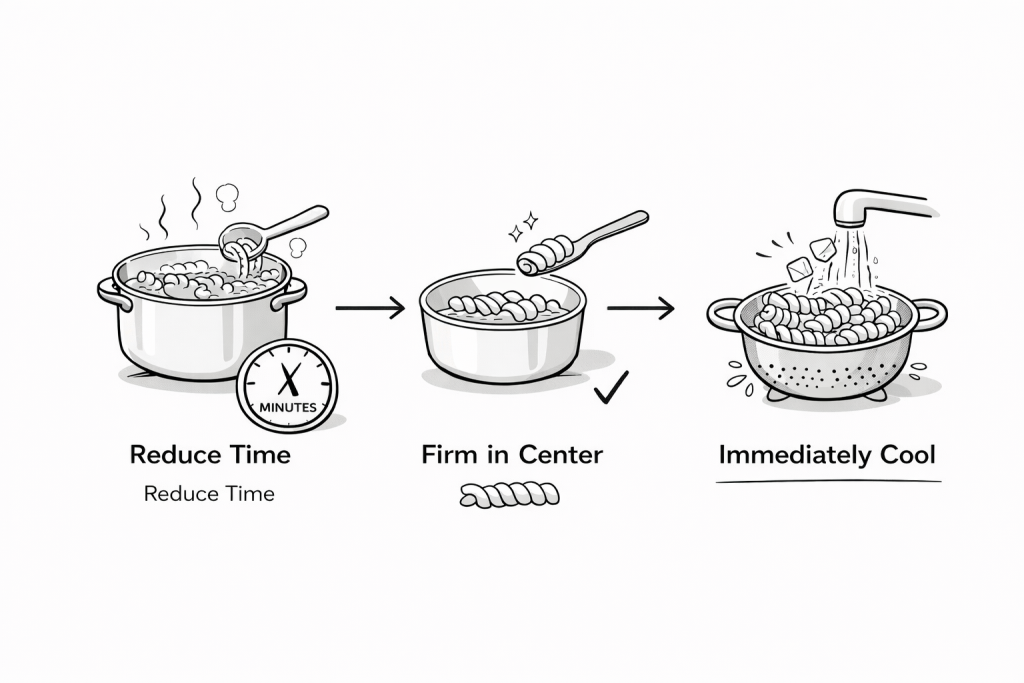
Aim for about 70–80% doneness. The pasta should still have noticeable firmness in the center when you bite into it. If it feels perfectly cooked before freezing, it will be overcooked after reheating.
To control this properly, remove the pasta from boiling water earlier than usual, strain it immediately, and run it briefly under cold water. This stops the cooking process and prevents carryover heat from pushing it past al dente.
Freezing is not the final stage of cooking — reheating is.
By undercooking at the beginning, you allow the reheating process to finish the pasta exactly where it should be.
Best Pasta Shapes for Freezer Meals
With so many pasta shapes available, some perform far better in freezer meals than others.
Best Performers
• Penne
• Rotini
• Shells
• Spaghetti
• Linguine
These shapes hold up well because they have balanced thickness and solid structural integrity. They’re thick enough to resist breaking down but not so large that they trap excess moisture.
Shapes to Be Cautious With
• Angel hair
• Very thin spaghetti
• Delicate fresh pasta
• Oversized tube shapes like large rigatoni
Extremely thin pastas break down quickly when reheated because they lack structural strength. Very large tube-shaped pastas can collapse or split after absorbing moisture.
It always comes back to structure.
What About Lentil and Chickpea Pasta?
Alternative pastas made from lentils or chickpeas offer added protein and nutritional benefits. However, their structure tends to be more brittle than traditional wheat pasta.
Lentil-based pasta generally performs better than chickpea-based pasta when frozen, but both require careful undercooking and controlled reheating. Without precision, they can become crumbly or mushy.
Sauce Strategy With Pasta
When freezing pasta successfully, sauce selection matters just as much as pasta shape.
Thicker sauces perform best. A thick sauce absorbs into pasta more slowly, preventing oversaturation during reheating. It also coats more evenly, creating a protective layer that limits moisture loss and reduces the risk of freezer burn.
Tomato-based sauces are ideal. Their natural acidity helps preserve flavor, and their structure holds up well during freezing. If you want added richness, incorporating cream into a tomato-based sauce works far better than freezing a cream sauce alone. The acidity helps stabilize the fat for smoother reheating.
A practical technique that makes a noticeable difference: lightly coat the pasta first, then reserve some sauce and layer it on top before freezing. This prevents over-absorption while ensuring the meal reheats saucy without becoming soggy.
The goal is to coat the pasta — not drown it.
Stop guessing. Build freezer meals that freeze and reheat perfectly.
Cooling & Portioning Strategy
Pasta continues to cook even after it’s drained — especially if it’s mixed with hot sauce.
When it reaches 70–80% doneness, strain it immediately and run it briefly under cool water. Let it drain thoroughly. Excess water dilutes sauce and increases unwanted moisture during freezing.
Allow both pasta and sauce to cool before combining. Lightly toss the pasta in a small amount of sauce to prevent sticking and drying.
Portion evenly into a freezer meal container that holds roughly 22 ounces and is no deeper than about 2.5 inches. Avoid thick clusters that reheat unevenly.
View the exact container I use here.
Finish by layering reserved sauce on top. Structure during portioning determines structure after reheating.
Reheating Without Turning It Mushy
Reheating pasta is simple if you stay in control.
Thaw when possible to reduce heating time. If not, manage heat carefully.
Start reheating with the lid partially covered to create light steam and even heat. About halfway through, gently stir to redistribute sauce and temperature.
Finish reheating with the lid off to release excess moisture. Avoid long stretches at high microwave power.
Pasta breaks down from overheating — not from freezing.
Common Pasta Freezer Mistakes
Pasta freezer meal success comes down to avoiding a few key mistakes:
• Choosing the wrong pasta shape
• Overcooking before freezing
• Using thin, watery sauces
• Freezing while the pasta is still hot
• Skipping the reserved sauce layer
• Reheating aggressively without moisture control
Each mistake compounds during freezing and reheating.
Final Thoughts
Using pasta in freezer meals is a great choice when done correctly.
Most failures aren’t caused by freezing — they’re caused by lack of control during cooking, portioning, and reheating. When you manage doneness, sauce structure, and moisture intentionally, pasta can freeze and reheat with excellent texture and flavor.
Freezer pasta doesn’t have to be soft. It just has to be controlled.
Looking for the tools behind this system?
View Recommended Tools
About the Author
Here at Cook Once Eat Later we share freezer meal recipes, meal prep systems, and practical freezing guides designed to help busy people save time without sacrificing flavor. Our focus is helping meals retain their texture, moisture, and quality long after they’ve been frozen.
Follow Cook Once Eat Later on Instagram for freezer meal tips, recipes, and meal prep inspiration.
FAQ
Can cooked pasta be frozen successfully?
Yes. Cooked pasta freezes very well when it is intentionally undercooked before freezing. Pasta should be about 70–80% cooked so that reheating finishes the cooking process instead of overcooking the noodles.
Why does pasta become mushy after freezing?
Pasta usually becomes soft after freezing because it was overcooked before freezing. When pasta is reheated it cooks again, which weakens the starch structure and causes the noodles to absorb more moisture.
Should pasta be frozen with sauce or without sauce?
Pasta generally freezes better with sauce. A thick sauce coats the noodles, slows moisture absorption, and helps protect the pasta from freezer burn during storage.
What pasta shapes freeze the best?
Pasta shapes with balanced thickness and strong structure perform best, including:
• Penne
• Rotini
• Shells
• Linguine
• Spaghetti
Very thin pasta like angel hair tends to break down during reheating.
Can cream sauces be frozen with pasta?
Cream sauces alone often separate during freezing. If you want a creamy pasta dish, combining cream with a tomato-based sauce usually freezes and reheats much better.
Should pasta be cooled before freezing?
Yes. Pasta should be cooled before freezing. Freezing hot pasta traps excess steam and moisture, which can lead to a soggy texture when reheated.
How long does frozen pasta last in the freezer?
For best quality, pasta freezer meals should be eaten within 2–3 months. While they may remain safe longer, texture and sauce quality gradually decline over time.