Ice crystals are one of the biggest threats to texture and quality in freezer meals. They form from excess moisture and air exposure, and over time they can lead to freezer burn and disappointing reheated food. The good news is that ice crystal formation is predictable — and preventable. With the right cooling, storage, and container strategy, you can preserve texture, flavor, and shelf life.
How to Prevent Ice Crystals in Frozen Meals (Quick Answer)
Ice crystals form when moisture moves to the surface of food and freezes, usually caused by air exposure, excess steam, or slow freezing. Preventing them comes down to controlling moisture, air, and temperature.
- Cool food completely before freezing to avoid condensation
- Use airtight containers and minimize empty space
- Spread food evenly to freeze faster
- Store meals in a stable freezer environment (back of freezer)
- Avoid thawing and refreezing
When air, moisture, and freezing speed are controlled, ice crystals are minimized and texture is preserved.
Disclosure: This article may contain affiliate links. As an Amazon Associate, I earn from qualifying purchases at no extra cost to you.
Ice Crystals in Food are Avoidable
Preventing ice crystals means preserving texture, flavor, and the longevity of your freezer meal. They’re created by excess moisture and exposure to cold air and can lead to freezer burn in worst-case scenarios. The good news is that ice crystals are avoidable. Once you understand what causes them, you can control them.
Want freezer meals that actually reheat properly? Get the free blueprint.
What Ice Crystals Actually Are
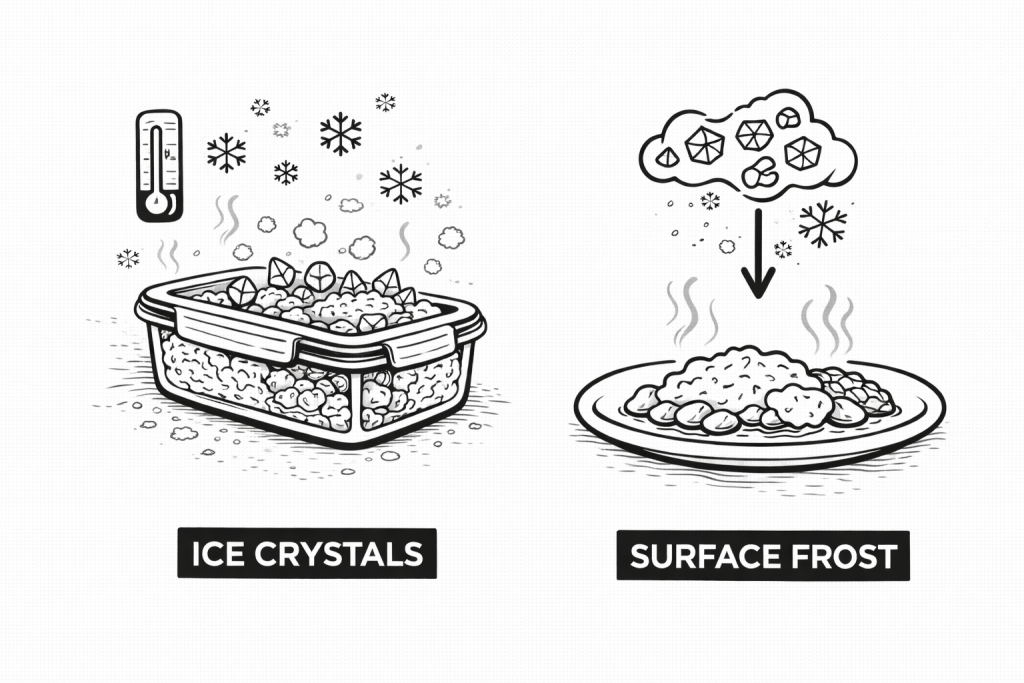
Ice crystals form when water rises to the surface of your food and freezes. These crystals damage cell walls and create excess moisture when reheated, which leads to texture breakdown.
The slower your food freezes — or the more temperature fluctuations it experiences — the larger the ice crystals become. Larger crystals cause more structural damage and reduce overall food quality.
Ice crystals are often confused with surface frost. Frost comes from moisture in the freezer environment, not from inside your food. While frost is less damaging, it still signals excess moisture and poor air control.
Understanding the difference helps you diagnose the real problem.
Air Exposure — The Primary Cause
Cold air exposure is the biggest contributor to ice crystal formation.
Cold air pulls moisture to the surface of your food and freezes it. The more air inside your container, the more opportunity there is for moisture migration and crystal buildup.
This is why container choice and fill level matter.
A properly sized container (roughly 22 oz capacity and no more than about 2.5 inches deep) allows you to fill it almost completely, minimizing empty air pockets.
Using a glass container with an airtight silicone seal and locking clasps creates a protective barrier against cold, dry freezer air.
View the exact container I use here.
Evenly spreading your food across the container also reduces exposed surface area, limiting moisture movement.
Your goal is simple:
Limit air exposure as much as possible.
Freezing Food While It’s Still Warm
Freezing food while it’s still warm is one of the biggest mistakes you can make with a freezer meal.
Warm food creates steam inside your container. That steam turns into condensation, and once frozen, it becomes ice. This accelerates ice crystal formation and increases the risk of freezer burn.
On top of that, when you reheat the meal later, that trapped condensation turns into excess liquid. Instead of a controlled, well-balanced dish, you end up with pooling water that dilutes flavor and ruins texture.
This is why cooling your meal completely before portioning and freezing is critical. Cooling eliminates unnecessary moisture and gives you full control over how much liquid is actually in your meal.
Temperature Stability in Your Freezer
Temperature stability inside your freezer plays a major role in preventing ice crystal growth.
When temperatures fluctuate, even slightly, small amounts of thawing can occur. That moisture then refreezes, forming larger ice crystals and increasing structural damage to your food. Over time, these repeated micro-thaw cycles reduce texture and overall quality.
A freezer meal kept at a consistent, stable temperature will freeze more evenly and limit crystal growth.
To reduce temperature swings:
• Store freezer meals toward the back of the freezer, where temperatures are most stable
• Avoid keeping the freezer door open longer than necessary
• Minimize frequently moving meals around
Stability is control. The more consistent your freezer environment, the better your food quality will be when reheated.
Freezing Speed & Container Depth
The goal when freezing a meal is to freeze it as quickly and evenly as possible. Faster freezing produces smaller ice crystals, which means less structural damage and better texture when reheated.
Proper cooling before portioning is the first step. Warm food slows down the freezing process and increases moisture buildup. Once cooled, portion your meal into a container that allows for even distribution.
Container depth matters more than most people realize. A container no deeper than about 2.5 inches allows food to freeze more uniformly. Thicker portions take longer to freeze, which increases ice crystal size and negatively affects reheating quality.
Even distribution inside the container also plays a role. Spreading food evenly:
• Encourages faster, more consistent freezing
• Reduces large frozen blocks
• Helps ensure uniform reheating
Using the right container makes following these principles natural rather than forced.
Stop guessing. Build freezer meals that freeze and reheat perfectly.
Reheating Without Making It Worse
If ice crystals have formed on your freezer meal — which can happen — reheating becomes critical.
Thawing first, when possible, will always improve the outcome. It reduces the amount of time your meal needs to spend under high heat and allows moisture to redistribute more evenly.
If reheating from frozen, keep the lid partially on at the beginning. This traps controlled steam and helps the food heat more evenly without immediately drying out.
Halfway through reheating, remove the lid and stir if possible. This helps release excess moisture that formed from the ice crystals and prevents pooling.
Finishing the reheating process with the lid off allows you to intentionally reduce excess moisture. The key is control — not blasting it on high heat and hoping for the best.
Why Your Freezer Meals Get Watery after Reheating
Ice crystals forming on your freezer meals is not uncommon. They are what make your meals come out watery, icy, and covered in frost. Most of the time, they’re the result of simple, avoidable mistakes.
To minimize crystal formation, avoid:
• Freezing food while it’s still hot
• Leaving too much headspace in the container
• Using containers with poor lid seals
• Choosing thin or low-quality plastic containers
• Repeated thawing and refreezing
• Storing meals near the freezer door
Each of these increases moisture movement or temperature instability — both of which accelerate ice crystal growth.
Control the variables, and you control the outcome.
Final Thoughts
Ice crystals are usually the result of a lack of control during the freezer meal process.
When you manage:
Air
Moisture
Temperature
Structure
You protect texture.
Freezing isn’t the problem.
Storage is.
Looking for the tools behind this system?
View Recommended Tools
About the Author
Here at Cook Once Eat Later we share freezer meal recipes, meal prep systems, and practical freezing guides designed to help busy people save time without sacrificing flavor. Our focus is helping meals retain their texture, moisture, and quality long after they’ve been frozen.
Follow Cook Once Eat Later on Instagram for freezer meal tips, recipes, and meal prep inspiration.
FAQ
Why do ice crystals form in freezer meals?
Ice crystals form when moisture rises to the surface of your food and freezes. This usually happens due to excess air exposure, freezing food while it’s still warm, or slow freezing speeds.
Do ice crystals mean my food is bad?
Not necessarily. Ice crystals don’t always mean food is unsafe, but they do indicate moisture loss and potential texture damage. In severe cases, they can lead to freezer burn.
What’s the difference between ice crystals and freezer burn?
Ice crystals are frozen moisture. Freezer burn happens when that moisture is lost over time due to air exposure, leaving food dry, discolored, and tough.
Should I let food cool before freezing it?
Yes — always. Freezing warm food creates condensation inside the container, which turns into ice and increases crystal formation.
Does container type really matter?
Yes. Airtight containers with strong seals (especially glass with silicone gaskets) reduce air exposure and help prevent moisture from turning into ice crystals.
How full should my container be?
As full as possible without overpacking. Less empty space means less air inside the container, which reduces moisture movement and ice crystal formation.
Does freezing speed affect ice crystals?
Yes. Faster freezing creates smaller ice crystals, which cause less damage to texture. Slow freezing leads to larger crystals and worse results when reheated.
Why does my food get watery after reheating?
That’s from melted ice crystals. When they thaw, they release excess water that pools in your meal and weakens texture and flavor.
Can I fix a meal that already has ice crystals?
You can improve it by reheating properly. Start covered to create steam, then uncover and finish heating to reduce excess moisture.
Where should I store meals in the freezer?
Store them toward the back of the freezer where temperatures are most stable. Avoid the door area, which experiences frequent temperature changes.