How long does cooked chicken really last in the freezer? The answer depends on two things: safety and quality. While frozen chicken can remain safe for months, texture and flavor begin to change long before safety becomes a concern. Understanding how freezing affects chicken—and how to control the process—allows you to extend the quality of your freezer meals and keep them tasting fresh.
How Long Cooked Chicken Lasts in the Freezer (Quick Answer)
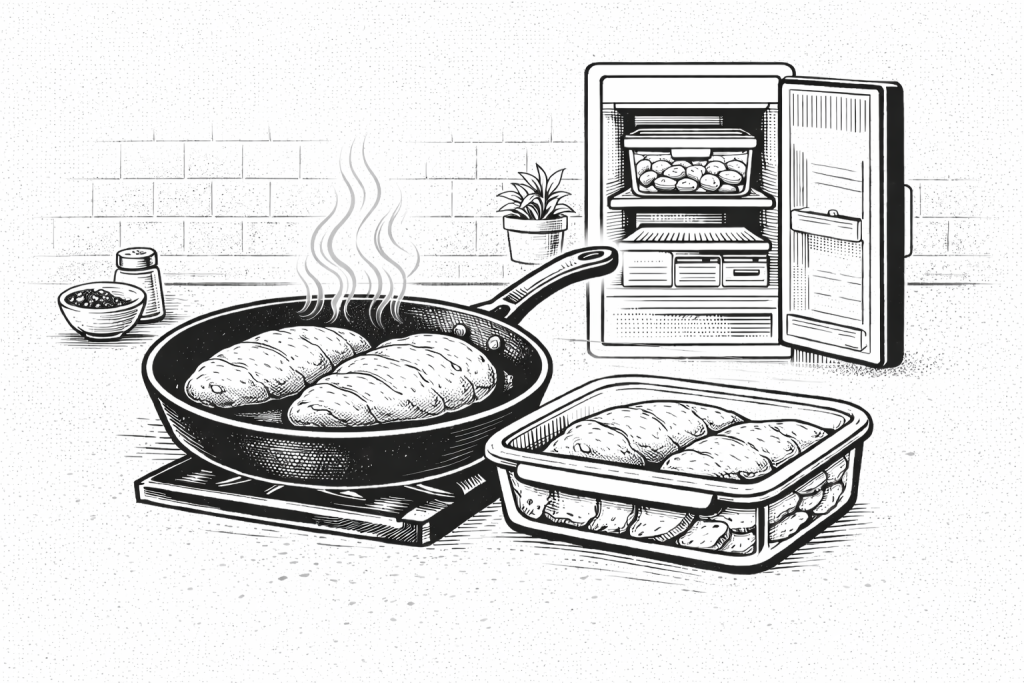
Cooked chicken can last up to 6 months in the freezer, but the best quality is usually within 1 to 3 months. While freezing keeps chicken safe for longer, texture and moisture begin to decline over time.
- 0–1 month: best texture and flavor
- 2–3 months: slight moisture loss begins
- 4–6 months: noticeable texture changes
- 6+ months: safe, but lower quality
Freezing preserves safety, but quality depends on how well the chicken is prepared, cooled, and stored.
Disclosure: This article may contain affiliate links. As an Amazon Associate, I earn from qualifying purchases at no extra cost to you.
Safety vs. Quality (They Are Not the Same)
There is an important difference between food safety and food quality.
Safety refers to the point where food may no longer be safe to eat due to bacterial growth or spoilage. Quality, on the other hand, refers to the texture, moisture, and flavor of the food.
Quality begins changing the moment chicken is cooked and continues slowly during storage.
Enzymes, bacterial activity, and environmental exposure gradually reduce the quality of cooked chicken. Freezing changes this environment. At freezer temperatures, bacterial growth stops and enzyme activity slows dramatically. This is why cooked chicken may last only a few days in the refrigerator but can remain safe for several months in the freezer, theres a real science behind the process.
The way chicken is frozen, however, determines whether the texture and flavor are preserved—or lost.
What Happens to Cooked Chicken When It Freezes
Freezing cooked chicken changes the physical environment inside the meat. By lowering the temperature, bacterial growth stops and enzymatic activity slows dramatically, allowing cooked chicken to be stored much longer than it could be in the refrigerator.
Chicken is made up of roughly 60–70% water. When this water freezes, it expands and forms ice crystals inside the meat. These crystals can damage the surrounding muscle cells, leading to structural breakdown.
The freezing process can be broken down into three stages:
Cooling Stage
The temperature of the cooked chicken drops from hot or room temperature toward the freezing point.
Transition Stage (Ice Crystal Formation)
As the temperature passes through the freezing range, water begins forming ice crystals.
Final Freezing Stage
The chicken reaches a stable frozen temperature where most of the water inside the meat is fully frozen.
The transition stage is the most important part of this process. This is when ice crystals form inside the meat. The size and distribution of these crystals determines how much structural damage occurs within the chicken.
Smaller ice crystals cause less damage to muscle fibers, while larger crystals rupture cell walls and release more moisture when the chicken is reheated.
Temperature swings and repeated thawing and refreezing can worsen this damage by repeating the ice crystal cycle and releasing additional moisture inside the container.
The Texture Timeline
Freezing preserves cooked chicken for long periods of time, but quality slowly changes during storage.
Month 0–1
Peak Quality Window
• Ideal texture
• Minimal moisture loss
• Fibers remain tender
This is the prime reheating window, where frozen chicken tastes closest to freshly cooked.
Month 2–3
Quality Beginning to Decline
• Slight dryness may begin
• Minor moisture loss during reheating
• Sauces help buffer texture
This is still an excellent window for freezer meals, but optimal texture is beginning to close.
Month 4–6
Noticeable Texture Changes
• Muscle fibers begin tightening
• Increased moisture loss during reheating
• Higher freezer burn risk
Meals remain usable, but texture changes may become noticeable.
6+ Months
End of Recommended Quality Window
• Texture degradation likely
• Flavor decline possible
• Higher freezer burn risk
Chicken may still be technically safe, but eating quality is usually compromised.
What Affects How Long Cooked Chicken Lasts
Beyond the quality of the chicken itself, the way it is prepared, cooled, and frozen determines how well it holds up in the freezer.
Cooling is especially important. Chicken that is sliced or cut into smaller pieces cools faster than large whole portions. Faster cooling reduces the size of ice crystals that form during freezing, helping preserve texture.
Cooling should be done in large stainless steel mixing bowls placed in the refrigerator. Stainless steel transfers heat efficiently and helps pull heat away from the food more quickly. As the chicken cools, excess moisture may collect at the bottom of the bowl. Draining this moisture before portioning helps prevent unwanted liquid inside the container later.
View Recommended Mixing Bowls.
Proper containers also matter. Glass containers with airtight seals perform well because they limit air exposure and maintain a stable environment during storage. Containers should ideally be no deeper than about 2.5 inches so food freezes evenly.
View the exact container I use here.
Adding sauce or moisture-rich components provides another layer of protection. The sauce acts as a barrier that helps retain moisture and protects the surface of the chicken during freezing.
Signs Your Frozen Chicken Has Lost Quality
Frozen chicken that has declined in quality often shows visible or textural signs.
Look for:
• Excessive ice crystals inside the container
• Pale or dry patches on the surface of the meat
• Noticeable flavor loss
• Stringy or dry texture after reheating
Freezer burn is usually a quality issue rather than a safety issue. The chicken may still be safe to eat, but texture and flavor can be significantly reduced.
Most of these issues can be avoided by controlling cooling, reducing air exposure, and using properly sealed containers.
Want freezer meals that actually reheat properly? Get the free blueprint.
How to Extend the Quality Window
Extending the quality window of frozen chicken comes down to control throughout the freezer meal process.
Start with fresh chicken that has not previously been frozen. From there, focus on proper cooking and controlled cooling before freezing.
Use shallow, well-sealed containers to reduce air exposure and allow even freezing. Adding sauce or moisture-rich ingredients can also help protect the surface of the chicken during storage.
Finally, store meals in a stable freezer environment and reheat them carefully to maintain texture.
When each step of the freezer meal process is handled correctly, the result is simple: better texture, better flavor, and longer-lasting meals.
Final Thoughts
Cooked chicken in freezer meals will usually be eaten long before safety becomes a concern. When stored properly, USDA guidelines suggest that cooked chicken can remain safe in the freezer for up to six months.
Long before that point, however, quality becomes the real issue. Texture changes, moisture loss, and freezer burn can affect the final result if the freezing process is not controlled.
The good news is that most quality problems are preventable. By following a structured freezer meal system—proper cooking, controlled cooling, thoughtful portioning, and well-sealed containers—you can significantly extend the quality of your frozen meals.
When you control the process, you control the outcome.
Cook once.
Eat later.
With structure.
Looking for the tools behind this system?
View Recommended Tools
About the Author
Here at Cook Once Eat Later we share freezer meal recipes, meal prep systems, and practical freezing guides designed to help busy people save time without sacrificing flavor. Our focus is helping meals retain their texture, moisture, and quality long after they’ve been frozen.
Follow Cook Once Eat Later on Instagram for freezer meal tips, recipes, and meal prep inspiration.
FAQ
How long does cooked chicken last in the freezer?
Cooked chicken can remain safe in the freezer for up to six months, according to USDA guidelines. However, the best texture and flavor are usually maintained within the first 1–3 months.
Can you freeze cooked chicken twice?
Refreezing cooked chicken is technically safe if it has been handled properly and kept cold. However, repeated freezing and thawing can increase moisture loss and damage the texture of the meat.
Why does frozen chicken sometimes become dry?
Dryness often occurs when large ice crystals form during freezing. These crystals damage the muscle fibers inside the meat, causing moisture to escape during reheating.
Does freezer burn mean chicken is unsafe?
Freezer burn usually affects quality rather than safety. Chicken with freezer burn may taste dry or bland but is often still safe to eat if it has been stored properly.
What is the best way to freeze cooked chicken?
For best results:
• Cool the chicken completely before freezing
• Use shallow airtight containers
• Reduce air exposure inside the container
• Add sauces or moisture-rich ingredients when possible
These steps help preserve texture and flavor during storage.