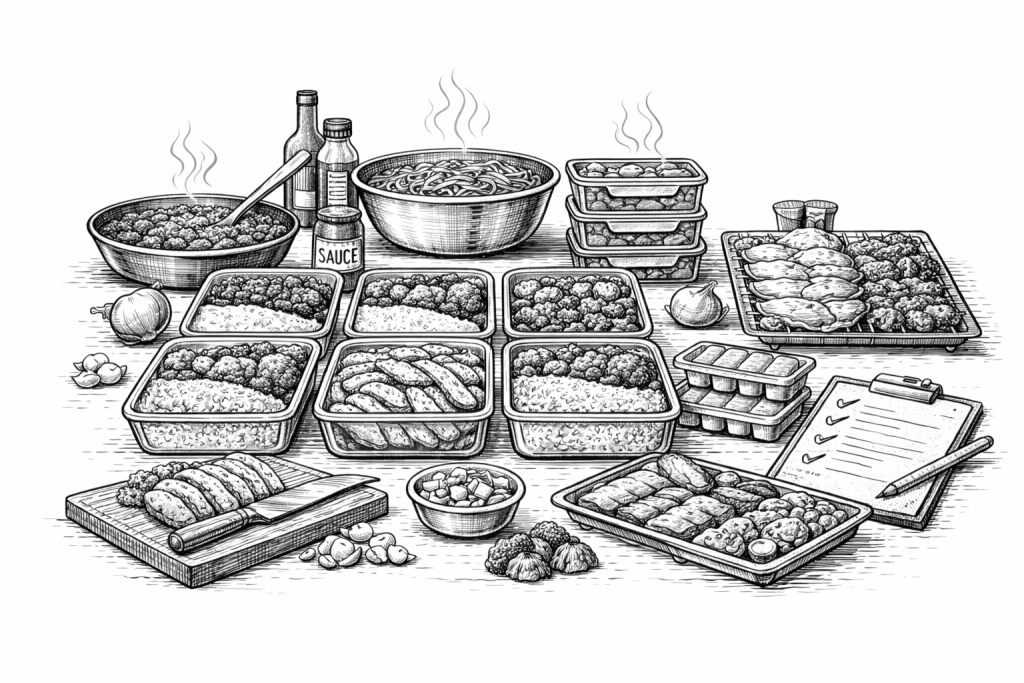
Batch cooking as a technique is the backbone of a successful freezer meal system. When done correctly, it allows you to cook once and eat later without sacrificing texture, flavor, or structure. The difference between freezer meals that reheat beautifully and ones that fall apart comes down to how you cook, cool, and assemble them from the start.
How to Batch Cook for Freezer Meal Prep Without Losing Quality (Quick Answer)
To batch cook freezer meals without losing quality, you need to cook slightly underdone, cool completely, and assemble with structure. Freezer meals are finished during reheating, so control at every step is critical.
- Slightly undercook proteins, starches, and vegetables
- Brown proteins to build flavor and structure
- Cool all components fully before freezing
- Strain excess moisture released during cooling
- Portion evenly in shallow, airtight containers
- Add sauce to protect moisture and texture
When cooking, cooling, and assembly are controlled, batch-cooked meals reheat with better texture, flavor, and consistency.
Disclosure: This article may contain affiliate links. As an Amazon Associate, I earn from qualifying purchases at no extra cost to you.
Batch Cooking for Freezer Meal Prep
Batch cooking saves time and money — but careless batch cooking ruins freezer meals.
Cooking for tonight is different than cooking for freezing. If you want meals that reheat properly, maintain texture, and hold their flavor, you must cook with the freezer in mind from the very beginning.
Freezer meals are not leftovers. They are engineered.
Want freezer meals that actually reheat properly? Get the free blueprint.
Start With the End in Mind (Cook for the Freezer, Not the Plate)
Cooking for the freezer is different than cooking for immediate consumption. When you cook a normal meal, you finish it exactly the way you want to eat it. When cooking for freezing, you need to leave strategic room for the reheating process to finish the job.
Vegetables, starches, and even certain proteins should be slightly undercooked before freezing. Reheating is not just warming — it is the final stage of cooking. If everything is fully cooked before freezing, reheating will push it past its ideal texture.
Seasoning also needs to be adjusted. Flavors can dull slightly during freezing and reheating, so seasoning should be intentional and slightly more assertive from the beginning.
When working with proteins, browning and crust development are still important. A proper Maillard reaction builds flavor and structure that survives the freezer better than steamed or lightly cooked protein.
You are not cooking this meal for tonight. You are cooking it for its final form — after freezing and reheating.
Cooking Multiple Components Without Overcooking Anything
Most freezer meals are built from four core components: a starch, a vegetable, a protein, and a sauce. Managing all of them in batches — especially when cooking multiple recipes at once — requires organization.
Before you turn on the heat, prepare everything. This is known as mise en place, meaning “everything in its place.” Chop vegetables, portion proteins, measure starches, and prepare seasonings and sauces in advance. Each component should be fully ready to cook without additional prep.
Start with starches. They are dense and require the most time to cool.
Proteins come next. Cook them in batches and avoid overcrowding the pan. Overcrowding traps steam, lowers heat, and prevents proper browning.
Vegetables are typically cooked last because they require the least amount of time. In most freezer systems, they are briefly blanched or quickly seared to preserve structure.
Sauce can be finished toward the end and allowed to cool while you prepare other components.
Throughout the process, strategically undercook certain ingredients. Reheating is the final stage of cooking.
Batch cooking is about sequencing and control.
Why Browning Still Matters
Freezing and reheating can dull flavor and soften texture if the food was not properly developed in the first place.
The Maillard reaction — browning under high heat — creates deeper flavor compounds and builds structural integrity into proteins. Think of the crust that develops when you sear a chicken breast in a pan, this process acts as flavor insurance.
When proteins are steamed or lightly cooked without browning, they lack depth. After freezing and reheating, that weakness becomes noticeable.
Proper browning creates a layer of developed flavor that survives freezing and reheating. Even lean proteins benefit from this structure.
Freezer meals do not excuse skipping technique. They demand it.
Cooling Before Assembly
Once each component is finished cooking, it must be cooled properly before assembly and freezing.
Cooling allows food to freeze faster and prevents excess moisture from becoming trapped inside containers.
Transfer each component into a large, wide stainless steel bowl and place it in the refrigerator. The wider the surface area, the faster heat escapes. Sheet pans or wire racks can also help speed cooling.
View Recommended Sheet Pans
View Recommended Wire Racks
As the components cool, liquid may pool at the bottom of the bowl. This is excess moisture being released. Strain or discard that liquid before assembly.
Allowing moisture to release at this stage prevents pooling inside freezer containers later.
Cooling is not optional — it is a protective step.
Assembly Strategy for Balance
Assembly becomes simple once your components are cooled and organized.
Make final seasoning adjustments if needed. Then portion evenly.
Using a measuring cup helps maintain consistency. A proper container — roughly 22 ounces and no more than 2.5 inches deep — supports even reheating.
View the exact container I use here.
Distribute components evenly across the container to prevent uneven heating.
Minimize headspace to reduce cold air exposure.
Finish by applying sauce. Sauce protects texture, supports moisture retention, and reinforces flavor.
Assembly sets up reheating success and allows your meals to last longer in the freezer.
Why Batch Cooking Is the Foundation of a Freezer System
Batch cooking is the foundation of a sustainable freezer system.
It allows you to cook once and eat later — tonight, this week, or next month.
When structured properly, batch cooking removes daily decision fatigue. Meals are portioned, balanced, and ready.
Instead of reacting to hunger, you execute a system.
Efficiency compounds over time.
Stop guessing. Build freezer meals that freeze and reheat perfectly.
Common Batch Cooking Mistakes
Avoid these common errors:
• Overcooking components before freezing
• Assembling meals while food is still hot
• Skipping proper mise en place
• Overcrowding pans
• Failing to strain released moisture
• Leaving too much headspace
• Neglecting sauce strategy
Batch cooking rewards control.
Final Thoughts
Freezer meals offer time savings, cost control, and convenience. Batch cooking is what makes those benefits sustainable.
Freezer meals do not fail in the freezer.
They fail during cooking.
When you cook intentionally, cool properly, and assemble with structure, you protect quality from start to finish.
Cook once.
Eat later.
With quality.
Looking for the tools behind this system?
View Recommended Tools
About the Author
Here at Cook Once Eat Later we share freezer meal recipes, meal prep systems, and practical freezing guides designed to help busy people save time without sacrificing flavor. Our focus is helping meals retain their texture, moisture, and quality long after they’ve been frozen.
Follow Cook Once Eat Later on Instagram for freezer meal tips, recipes, and meal prep inspiration.
FAQ
How is batch cooking for freezer meals different from regular cooking?
Batch cooking for freezer meals requires planning for reheating. Food should be slightly undercooked and structured so that the reheating process finishes the cooking without overcooking or drying it out.
Should you fully cook food before freezing it?
No. Most components should be slightly undercooked before freezing. Reheating acts as the final stage of cooking, and fully cooked food can become overcooked and lose texture.
Why is cooling food before freezing so important?
Cooling prevents condensation inside the container, which leads to excess moisture and ice crystal formation. Proper cooling also helps food freeze faster and more evenly, preserving texture.
What is the best way to cool food quickly before freezing?
Spread food in wide, shallow containers or on sheet pans and place it in the refrigerator. Increasing surface area allows heat to escape faster and reduces moisture buildup.
Why does browning matter when batch cooking for freezer meals?
Browning creates deeper flavor and stronger texture through the Maillard reaction. This added structure helps food maintain quality after freezing and reheating.
What is the best way to organize batch cooking?
Prepare all ingredients in advance (mise en place), then cook in sequence:
1. Starches
2. Proteins
3. Vegetables
4. Sauce
This prevents overcooking and keeps the process efficient.
How do you prevent freezer meals from becoming watery?
Allow food to cool fully and strain any excess liquid released during cooling. Trapped moisture turns into ice during freezing and leads to water pooling after reheating.
What role does sauce play in batch cooking?
Sauce helps retain moisture, protect texture, and carry flavor. It acts as a barrier against dryness during freezing and reheating, it also helps protect against freezer burn.
Can you batch cook multiple meals at once?
Yes, but it requires organization. Preparing all ingredients beforehand and cooking components in sequence allows you to manage multiple meals without sacrificing quality.
What are the most common batch cooking mistakes?
The biggest mistakes include overcooking before freezing, skipping proper cooling, overcrowding pans, and assembling meals while still hot.
Is batch cooking worth it for freezer meals?
Yes. When done properly, batch cooking saves time, reduces waste, and creates consistent, high-quality meals that reheat well.