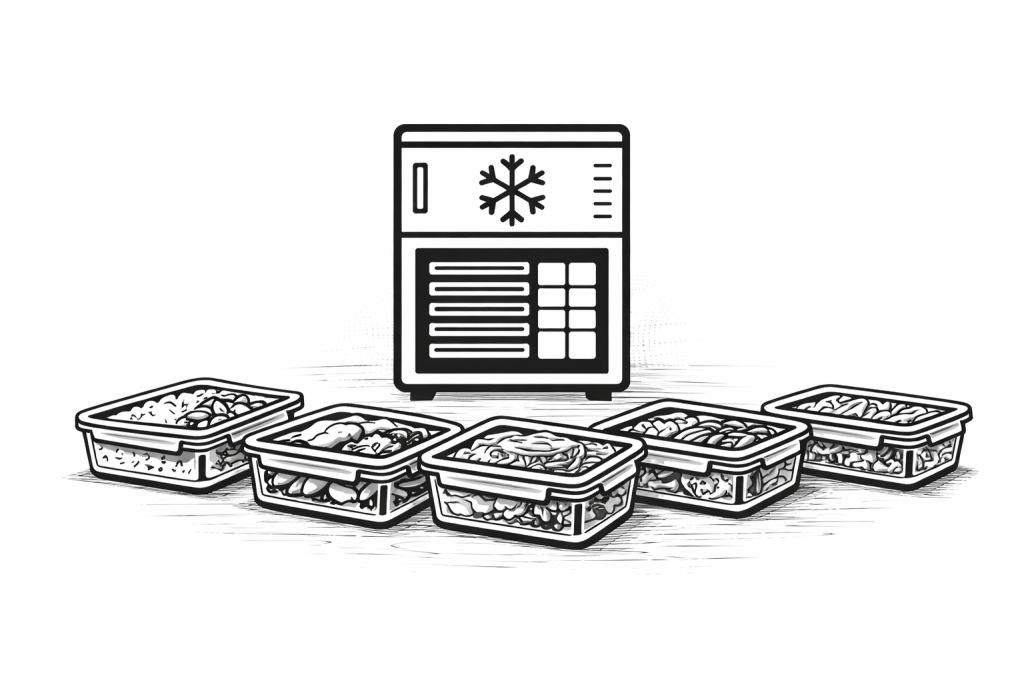
Freezer meals aren’t leftovers thrown into containers. They’re structured systems designed to preserve texture, flavor, and efficiency. When you understand the workflow — from shopping to reheating — freezer meals become predictable, repeatable, and high quality. This is the complete blueprint.
The Philosophy
Cook once. Eat later.
Freezer meals don’t fail because of the freezer. They fail because of poor execution.
When you follow a structured system, freezer meals become consistent. Texture holds. Flavor remains intact. Reheating becomes simple. Guesswork disappears.
This article brings everything together.
This is the blueprint.
Disclosure: This article may contain affiliate links. As an Amazon Associate, I earn from qualifying purchases at no extra cost to you.
Start With the End in Mind
When you’re making freezer meals, you’re not cooking for the plate — you’re cooking for the freezer.
Your meal must survive freezing and reheating. That means the cooking process isn’t finished when the burner turns off. It finishes when you reheat it.
To account for that:
• Strategically undercook certain components
• Blanch vegetables instead of fully cooking them
• Brown proteins properly to build structure
• Season slightly stronger than usual
• Choose sauces intentionally
• Avoid ingredients that collapse under freezing
Every decision should account for what happens after the initial cook, freezer meals succeed when you think beyond the pan.
Want a complete freezer meal system? Get the free blueprint.
The Freezer Formula
At the core of every successful freezer meal is a simple structure:
Protein + Starch + Vegetable + Sauce
Each plays a specific role.
Protein
Protein is the structural foundation of the meal. It provides satiety and anchors the plate. From a freezing perspective, it must be cooked properly to prevent moisture loss during reheating. Fat content and browning both matter.
Starch
Starch provides energy and balance. More importantly, it acts as a moisture buffer. Rice, potatoes, and grains absorb and redistribute liquid, reducing separation when reheated.
Vegetable
Vegetables add fiber, micronutrients, and structural contrast. Choosing the right vegetables — and cooking them correctly — determines whether they reheat firm or fall apart.
Sauce
Sauce is more than flavor.
It provides moisture, protection, and insurance. A properly built sauce creates a barrier against air exposure and slows dehydration during freezing.
Without sauce, most freezer meals will dry out. Each component supports the others and together, they create a structured, balanced meal designed to survive the entire process.
Batch Cooking Workflow
Batch cooking is the engine of the freezer meal system. It allows you to prepare multiple days — or even weeks — of meals in a controlled block of time.
Everything starts with mise en place — “everything in its place.” All ingredients should be chopped, measured, and organized before heat is applied.
Once prep is complete, execution becomes controlled.
Cook in This Order:
Starches First
Starches typically take the longest to cook and cool. Starting here gives you a head start on both timelines.
Proteins Next
Protein requires the most control. Avoid overcooking. Protein fibers contract during cooking, contract further when frozen, and tighten again during reheating. Browning builds flavor and strengthens structure.
Vegetables Last
Vegetables cook quickly. In most cases, a quick blanch or brief sear is enough. Undercooking prevents structural collapse during reheating.
Sauce Final
Use fond from the pan to build depth. Ensure the sauce has a freezer-friendly base. It acts as protection and insurance.
Batch cooking succeeds when three things are controlled:
• Mise en place
• Timing
• Technique
Cooling Before Assembly (Critical)
Cooling is one of the most important steps in the system.
After cooking, transfer components into large stainless steel bowls or spread them out on sheet pans. Increased surface area allows heat to escape efficiently.
If food is sealed while warm, trapped steam becomes condensation. That condensation becomes ice. That ice becomes structural damage.
Once fully cooled, you’ll often see liquid pooled at the bottom of bowls or trays, strain it. That liquid would have frozen inside your container and created a watery reheat.
Cooling is structural control, never freeze hot.
Assembly Strategy
Assembly becomes simple when everything is cooled properly.
Measure portions intentionally. This ensures nutritional balance and consistent meal distribution. Use a proper container thats around 22 ounces with a depth of no more than approximately 2.5 inches. Shallow containers:
• Freeze faster
• Limit large ice crystal formation
• Reheat more evenly
• Reduce headspace
View the exact container I use here.
Minimize empty space inside the container to limit air exposure. Distribute components evenly. Avoid stacking dense clusters in one corner.
Apply sauce last. It provides both flavor and protection.
Assembly is not random placement, it is structural design.
Freezing & Storage
Once assembled and sealed, freezing becomes the next point of control.
Label each container with the date prepared. Rotate meals as new ones are added.
Store meals toward the back of the freezer where temperatures remain most stable. Items near the door experience temperature fluctuations, which contribute to condensation and ice crystal growth.
If a meal fully thaws, eat it rather than refreeze it. Repeated freeze–thaw cycles increase structural damage and degrade quality.
Freezing is preservation through consistency.
Reheating With Intention
Reheating completes the cooking process.
Thawing first improves even heating but is not required.
Begin reheating with the lid partially on to create controlled steam and deeper heat penetration. Halfway through, remove the lid and stir if possible. Finish reheating with the lid off to allow excess moisture to evaporate intentionally.
Avoid overheating. Excess heat tightens proteins, weakens vegetables, and dulls flavor.
Reheating is the final point of control.
Where Freezer Meals Fail
Freezer meals fail when structure is ignored.
Avoid:
• Using aging or low-quality ingredients
• Skipping mise en place
• Overcooking components
• Freezing food while hot
• Choosing poor containers
• Forgetting sauce protection
• Overheating during reheating
Freezer meals do not fail because of the freezer, they fail because of preparation.
Stop guessing. Build freezer meals that freeze and reheat properly.
Final Thoughts
Freezer meals are engineered systems based on food science.
When you control:
• Structure
• Moisture
• Air
• Temperature
• Reheating
You control quality.
Freezing isn’t the problem, preparation is.
Cook once.
Eat later.
With structure.
Looking for the tools behind this system?
View Recommended Tools
About the Author
Here at Cook Once Eat Later we share freezer meal recipes, meal prep systems, and practical freezing guides designed to help busy people save time without sacrificing flavor. Our focus is helping meals retain their texture, moisture, and quality long after they’ve been frozen.
Follow Cook Once Eat Later on Instagram for freezer meal tips, recipes, and meal prep inspiration.
FAQ
What is the best way to make freezer meals?
The best way to make freezer meals is by following a structured system that includes proper cooking, cooling, portioning, and storage. Using a balanced formula of protein, starch, vegetables, and sauce helps meals freeze well and reheat evenly without losing texture or flavor.
Why do freezer meals lose texture?
Freezer meals lose texture when moisture is not controlled. Freezing hot food creates condensation, which turns into ice crystals and damages structure. Overcooking, poor ingredient selection, and improper reheating can also lead to dry or mushy results.
Should you let food cool before freezing?
Yes. Food should always be fully cooled before freezing. Cooling prevents condensation inside the container, which reduces ice crystal formation and helps maintain texture during reheating.
What is the best container for freezer meals?
The best container for freezer meals is a shallow, airtight container around 20–24 ounces. Shallow containers freeze faster, reduce large ice crystals, and allow for more even reheating.
How do you keep freezer meals from drying out?
Freezer meals stay moist when a proper sauce is included. Sauce acts as a protective layer that reduces moisture loss during freezing and reheating. Avoid overcooking protein and always reheat with controlled heat.
Can you freeze meal prep for the whole week?
Yes. Freezer meal prep allows you to prepare multiple days or weeks of meals in advance. When properly stored and labeled, freezer meals can maintain quality while saving time and reducing daily cooking.
Do freezer meals lose nutritional value?
Freezing preserves most nutrients. In many cases, frozen meals retain more nutrients than food stored in the refrigerator for several days. Proper preparation and storage help maintain both quality and nutrition.
What is the biggest mistake when freezing meals?
The biggest mistake is freezing food while it is still warm. This creates condensation, which leads to ice crystals and texture damage. Skipping structure and balance in the meal design is another common issue.