Freezer meals work best when they follow a clear structure. Instead of freezing random leftovers, using a simple formula will create balanced meals that freeze well and reheat properly. Once you understand the structure, you can build endless combinations that save money, preserve quality, and eliminate guesswork.
Balanced Freezer Meal Formula (Quick Answer)
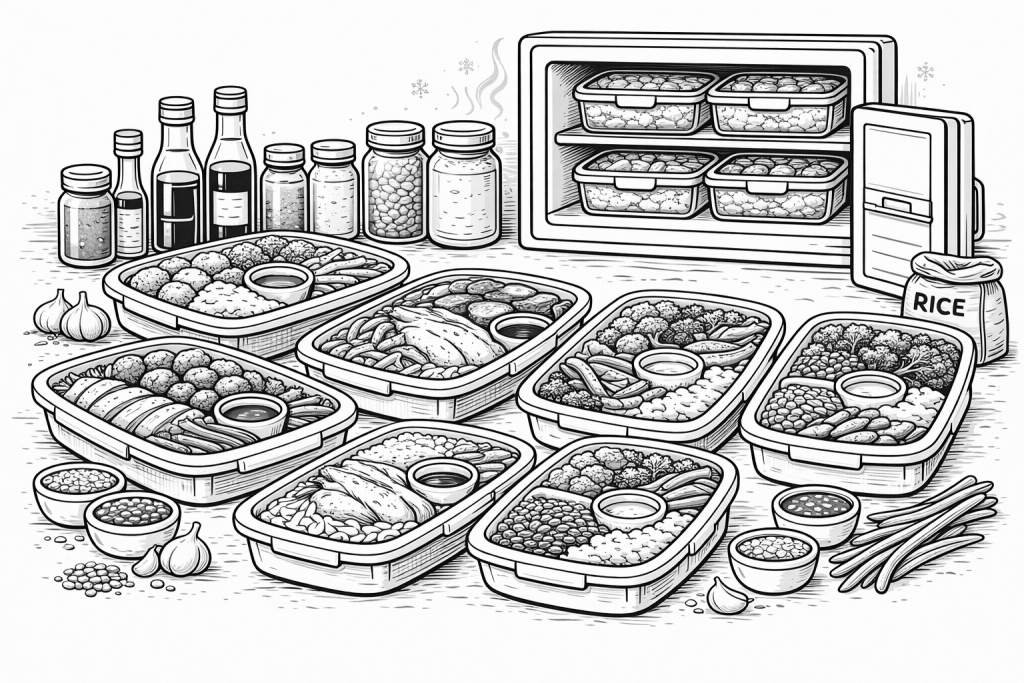
Balanced freezer meals follow a simple structure: protein + starch + vegetable + sauce. When each component is included and properly portioned, meals freeze more evenly, retain moisture, and reheat with better texture.
- Protein provides structure and satiety
- Starch absorbs and stabilizes moisture
- Vegetables add texture and balance
- Sauce protects against dryness and improves reheating
When these four components work together, freezer meals become consistent, repeatable, and reliable.
Disclosure: This article may contain affiliate links. As an Amazon Associate, I earn from qualifying purchases at no extra cost to you.
Freezer Meal Structure
Freezer meals are versatile, but their success depends on balance and structure. When you follow a simple formula — protein + starch + vegetable + sauce — you create meals that freeze well, reheat evenly, and maintain texture.
This structure is exactly what expensive store-bought freezer meals aim to achieve. The difference is that when you build it yourself, you control the quality, ingredients, and cost.
With the right formula, freezer meals stop being leftovers and become engineered, repeatable systems.
Want freezer meals that actually reheat properly? Get the free blueprint.
Why Balanced Structure Matters
Balanced structure matters because each component in your formula serves a specific purpose. When protein, starch, vegetables, and sauce work together, the meal reheats evenly, maintains texture, and feels complete.
Using a proper container matters, finding one that holds roughly 22 ounces naturally guides portion control. Dividing that space between three primary components and a sauce encourages balance without overloading any single element. Instead of one oversized portion of starch or protein, you create a meal that supports dietary goals while still feeling satisfying.
View the exact container I use here.
A balanced structure also improves reheating while even distribution prevents hot and cold spots. A sauce made from a good base will provide protection, a starch will help absorb moisture and vegetables will help provide structural contrast.
When each component has a role and a defined space, the result is predictable.
Freezer meals should be engineered, not accidental.
Hearty and Healthy
Protein: Ground turkey meatballs
Starch: Mashed sweet potato
Vegetable: Carrots + green beans
Sauce: Honey mustard broth-based sauce
Why it freezes well:
• Formed turkey meatballs retain moisture better than crumbled lean protein
• Sweet potatoes reheat smoothly without becoming grainy
• A light broth-based sauce protects the surface and adds balanced sweetness and acidity
This combination balances structure and moisture. The starch absorbs excess liquid, the vegetables hold shape when properly undercooked, and the sauce prevents dryness.
Lean High-Protein Bowl
Protein: Sliced chicken breast
Starch: Herb-seasoned rice
Vegetable: Broccoli
Sauce: Ginger soy-based glaze
Why it works:
• Browning builds flavor insurance before freezing
• Even slicing supports consistent reheating
• A glaze-style sauce coats without oversaturating
This chicken protein bowl is structured, clean, and reheats evenly when properly cooled and assembled.
Mediterranean Style
Protein: Chicken thigh
Starch: Orzo or rice
Vegetable: Peppers + onions
Sauce: Tomato + olive oil base
Why it works:
• Higher fat content improves freeze stability
• Aromatics maintain flavor after reheating
• Tomato-based sauce provides acidity and protection
Fat, acidity, and structure combine to create a forgiving freezer-friendly meal.
Asian-Inspired Stir Fry Bowl
Protein: Sliced beef or chicken
Starch: Jasmine rice
Vegetable: Broccoli + snap peas
Sauce: Honey garlic broth-based sauce
Why it works:
• Thickened sauce limits moisture loss
• Structured vegetables maintain texture when slightly undercooked
• High-heat browning preserves depth and texture
Control of heat and sauce consistency is what makes this formula reliable.
Vegetarian Structured Bowl
Protein: Lentils or beans
Starch: Quinoa or rice
Vegetable: Roasted carrots + kale
Sauce: Tomato-based or tahini-based sauce
Why it works:
• Starch-heavy base supports freezing and reheating stability
• Thick sauce prevents separation
• Proper cooling removes excess moisture before assembly
Even plant-based meals benefit from the same structural rules.
Stop guessing. Build freezer meals that freeze and reheat perfectly.
How to Build Your Own Formula
The formula is simple, but structure makes it powerful.
1. Choose a protein (consider fat level and structure)
2. Choose a starch (slightly undercook when needed)
3. Choose freezer-friendly vegetables
4. Choose a sauce with a stable base
5. Prepare with proper mise en place
6. Batch cook with heat control
7. Cool completely
8. Portion evenly
9. Minimize headspace
10. Freeze properly
When you follow this sequence, freezer meals stop feeling random and start feeling repeatable.
Weeks of balanced meals can be built in one structured session.
Final Thoughts
Freezer meals are meant to save time, money, and energy. You do not need to be a professional chef to make them work — you need a system.
Freezer meals are not guesswork, they are structured systems.
Once you understand the formula, you can create endless combinations while preserving texture and quality.
Cook once.
Eat later.
With structure.
Looking for the tools behind this system?
View Recommended Tools
About the Author
Here at Cook Once Eat Later we share freezer meal recipes, meal prep systems, and practical freezing guides designed to help busy people save time without sacrificing flavor. Our focus is helping meals retain their texture, moisture, and quality long after they’ve been frozen.
Follow Cook Once Eat Later on Instagram for freezer meal tips, recipes, and meal prep inspiration.
FAQ
What is the best structure for freezer meals?
The best structure for freezer meals is a balanced combination of protein, starch, vegetables, and sauce. Each component plays a role in texture, moisture control, and even reheating. This structure helps meals freeze well and prevents common issues like dryness or uneven heating.
Why do freezer meals need a sauce?
Sauce acts as a protective layer that helps retain moisture during freezing and reheating. Without it, proteins can dry out and starches can become firm or grainy. A properly balanced sauce improves both texture and flavor while helping prevent freezer burn.
Can you freeze meals without a starch?
You can, but starches help stabilize moisture and improve reheating consistency. Meals without a starch are more likely to dry out or heat unevenly unless additional moisture is added through sauces or fats.
How do you keep freezer meals from getting soggy?
Controlling moisture is key. Cool all ingredients before freezing, avoid overly watery components, and use structured layering. Proper portioning and airtight containers also prevent excess condensation and texture breakdown.
What is the best container size for freezer meals?
A container around 20–24 ounces works well for balanced meals. This size encourages proper portioning between protein, starch, vegetables, and sauce while allowing even reheating.
View the exact container I use here.
Can you meal prep freezer meals for weight loss?
Yes. Using a structured formula helps control portions and balance macronutrients. By choosing lean proteins, controlled starch portions, and nutrient-dense vegetables, freezer meals can support consistent and sustainable eating habits.