By Cook Once. Eat Later. • Updated October 5, 2026
This freezer-friendly teriyaki sauce recipe is one of the most-used sauces in my household. It’s easy to make, pairs well with almost any protein or vegetable, and is packed with flavor.
It also freezes really well and helps keep your food from drying out. It can even help protect your meals from freezer burn when you’re freezing complete meals and reheating them later.
This teriyaki sauce recipe is something I grew up eating, made by my dad. He would constantly make me stir-fries and sticky ribs using this recipe, so it’s a sauce I’ve been eating and enjoying for years.
I hope you enjoy it as much as we do.
Teriyaki Sauce Recipe (Quick Guide)
- Yes, this teriyaki sauce freezes well and can be stored on its own or as part of a complete freezer meal.
- It doesn’t use a cornstarch slurry, so you don’t have to worry about the same texture issues that can happen with some cornstarch-thickened sauces.
- The sauce is thickened by reducing the mirin and other ingredients into a sticky glaze.
- You can freeze it in individual portions or silicone freezer cubes for easy use later.
- You can also add it directly to a complete freezer meal with a protein, starch, and vegetable.
- For best quality, I recommend using frozen teriyaki sauce within 2–3 months.
- When reheating, you can add a little water if the sauce has become too thick.
Disclosure: This article may contain affiliate links. As an Amazon Associate, I earn from qualifying purchases at no extra cost to you.
Why You’ll Love This Recipe
You’re gonna love this recipe for the same reasons we do. It’s easy to make, packed with umami, versatile, freezes well, and it’s a family favorite in our household.
It also goes perfectly with freezer meals. It’s one of those sauces where you can look in the fridge, see whatever proteins and vegetables you have left, and turn them into something really good with this sauce.
The ingredients are affordable, and the whole thing only takes a couple of minutes to make. It’s an easy sauce to keep on hand, especially when you want to throw together a quick meal without starting from scratch.
Ingredients
- ½ cup low-sodium soy sauce
- ½ cup mirin
- ¼ cup brown sugar
- 2 tablespoons rice vinegar
- 2 tablespoons grated ginger
- 2 garlic cloves, grated or minced
- 1 teaspoon toasted sesame oil
- 2 tablespoons water
- 1 teaspoon Worcestershire sauce
Ingredient Tips
The Soy Sauce
I always try to use low-sodium soy sauce instead of regular soy sauce. Soy sauce contains a lot of sodium, and I’m always looking for ways to reduce the amount of sodium in my food.
You’re still going to get all that umami flavor, so go with low-sodium soy sauce whenever you can.
The Sweetener
I always opt for brown sugar in this recipe. You can use honey or regular sugar if you prefer, but I find that brown sugar adds another layer of complexity to the sauce and gives it a deeper flavor.
The Acid
Make sure you use rice vinegar if you can. If you don’t have it, you can use a substitute. I’ve even used apple cider vinegar in a pinch.
The important thing is that you have some type of vinegar in the sauce. The acid helps balance everything out and keeps the sauce from tasting overly sweet or salty.
The Ginger and Garlic
You can play around with the quantities of ginger and garlic, but I always find that these amounts work best.
I personally like my teriyaki sauce to have a punch, which is why I usually add a little extra ginger and garlic. If you prefer a milder flavor, you can always scale them back.
The Thickener
Most teriyaki sauces call for a cornstarch slurry to thicken the sauce, but we’re making this recipe specifically to be freezer-friendly, and we don’t need it here.
Instead, we’re going to reduce the mirin as the sauce cooks. Once the mirin reduces, it creates a thick, shiny glaze that holds together really well and reheats beautifully.
This is one of the things that makes this recipe different from a traditional cornstarch-thickened teriyaki sauce. There’s no slurry to worry about separating when the sauce is frozen and reheated.
How to Make This Freezer-Friendly Teriyaki Sauce
Step 1: Prepare Your Ingredients
Start with your mise en place. Measure out all of your ingredients and have everything ready before you begin cooking.
This keeps you organized and saves time once you start cooking. Since we’re reducing the sauce, you want everything ready to go before you put it on the heat.
Step 2: Combine All of Your Ingredients
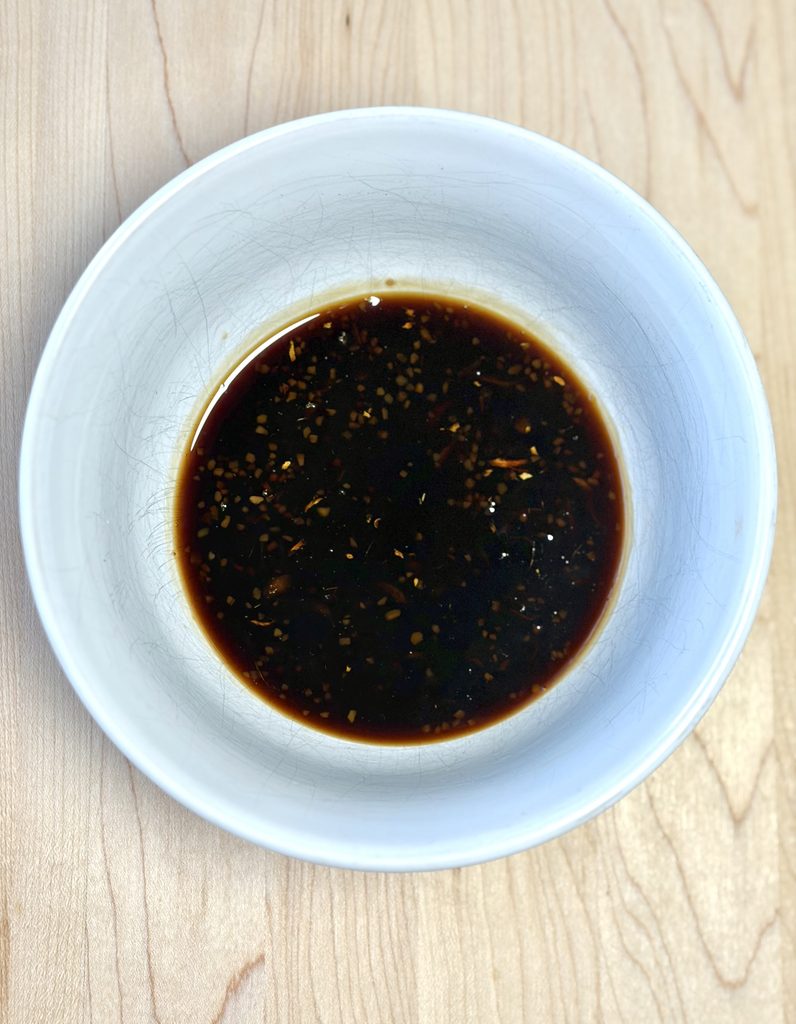
Add all of your ingredients to a separate bowl and mix everything together well.
I recommend doing this before adding anything to the pan rather than adding your ingredients one at a time while the pan is heating. You want everything to enter the pan at the same time so the ingredients can mix together and reduce evenly into that sticky teriyaki glaze we’re looking for.
Step 3: Heat and Reduce the Sauce
You have two options here. You can reduce the sauce on its own by adding the mixture to a saucepan over medium to high heat and allowing it to reduce.
Alternatively, you can add the mixture directly to your noodles, stir-fry, or whatever you’re cooking and let the sauce reduce in the pan with the rest of your food.
I personally prefer reducing the sauce on its own because it’s easier to control the consistency. When you’re reducing it directly in a stir-fry or with other ingredients, it can be a little harder to tell exactly how thick the sauce is getting.
Step 4: Taste and Adjust
As your sauce begins to thicken, give it a taste and see if it needs any adjustments.
You can add a little more ginger, garlic, sweetness, acidity, or soy sauce depending on your personal preference and what you’re using the sauce for.
If your sauce is looking too thick, you can add a small amount of water to loosen it up. Add it gradually until you reach the consistency you’re looking for.
Step 5: Check the Consistency
The key to this recipe is getting the sauce to reduce into a thick, sticky glaze.
One easy way to check if it’s ready is with the back-of-the-spoon test. Dip a spoon into the sauce and remove it from the pan. Run your finger across the back of the spoon through the sauce.
If the sauce stays separated where you ran your finger, your teriyaki sauce is ready. If the sauce immediately runs back together, it needs a little more time to reduce.
Step 6: Cool Before Freezing
Whether you’re freezing the sauce on its own or you’ve already mixed it into a complete meal, make sure everything has cooled before transferring it to the freezer.
This helps prevent excess condensation and ice crystals from forming and makes the freezing and reheating process easier later.
A Note About How to Use This Sauce
This sauce can be made on its own and frozen for later, or you can add it directly to a stir-fry, noodles, or another meal and let it reduce right in the pan with your food.
The most important thing to remember is that you want the sauce to reduce into that thick, sticky glaze. Once you’ve reached that consistency, you’re ready to use it immediately or cool it down and freeze it for later.
Pro Tips
Don’t Overthicken It
This is especially important if you’re going to freeze the sauce. When you warm it up, the sauce can continue to reduce and become thicker.
Make sure you get it to the proper consistency before freezing. Use the spoon trick to check your sauce, or add a little water if you need to loosen it up.
Taste Before You Freeze It
Before you freeze your sauce, give it one last taste and make sure everything is balanced.
Think about the salty, sweet, and acidic flavors and adjust anything that needs it. Remember, this sauce is completely customizable, so you can adjust it depending on your taste and what you’re planning to use it for.
Let It Cool Completely Before Freezing
Make sure your sauce has cooled completely before transferring it to the freezer.
This helps reduce the amount of ice crystals that form during freezing and can help preserve the quality of your sauce.
Always Make Extra
If you’re already making this sauce, make extra. It’s one of those recipes that’s incredibly useful to have sitting in the freezer.
Freeze it in individual portions so you can grab exactly what you need whenever you’re making a quick meal.
What to Serve With This Teriyaki Sauce
One of my favorite things about this teriyaki sauce is how versatile it is. You can use it with just about anything, which is why I like to think of it as a one-stop-shop sauce.
Proteins
Starches
- Rice
- Rice noodles
- Udon noodles
- Fried rice
Vegetables
- Broccoli
- Bell peppers
- Carrots
- Edamame
- Green beans
- Stir-fried vegetables
Other Ways to Use It
Don’t feel like you have to limit this sauce to traditional stir-fries. I also like using it in wraps or as a dipping sauce. It’s great on salmon and works with almost any combination of protein, starch, and vegetables.
The possibilities are pretty much endless, which is exactly what I want from a freezer-friendly sauce.
How to Use Teriyaki Sauce for Freezer Meals
When using this sauce for freezer meals, you can add it directly to your meal. You can mix it into your food, like a stir-fry, or layer it over your ingredients (usually works best), like chicken and rice.
Adding the sauce directly to your freezer meal also helps protect the food from drying out and freezer burn while helping maintain its texture and flavor when you eventually thaw and reheat it.
You can also freeze the sauce separately in silicone freezer cubes or individual portions. I really like this method for meals you’re making at home when you just need a little extra flavor. You can grab a portion from the freezer and add it to whatever you’re cooking.
View recommended reusable silicone ice cube trays
Build a Complete Teriyaki Freezer Meal
This is where the Cook Once, Eat Later Freezer Meal System comes into play.
The concept is simple: pick a protein, a starch, a vegetable, and a sauce.
For example:
Chicken + rice + broccoli + teriyaki sauce
That’s a complete freezer meal you can prepare ahead of time, freeze, and have ready to eat later.
That’s the idea behind Cook Once, Eat Later. You don’t have to follow a complicated meal plan or make the exact same freezer meal every time. You can customize your meals by choosing the individual components you like and putting them together into a complete meal.
Pick your recipe, cook once, freeze it, and eat it later.
Want to make your own freezer meals? Click below and get the free blueprint.
Storage & Freezing
This teriyaki sauce is designed to freeze well and can be stored either on its own or as part of a complete freezer meal.
For the best quality, I recommend using it within 2–3 months. This also follows suit with USDA guidelines. Always check your food to make sure it has not gone bad.
If you’re freezing individual portions, silicone freezer trays work particularly well because you can freeze the sauce in convenient portions and transfer the frozen cubes to a freezer-safe bag or container.
Always label and date your frozen sauce so you know when it was prepared.
When you’re ready to use it, you can thaw the sauce in the refrigerator or add individual frozen portions directly to a hot stir-fry, noodle dish, or other meal and allow the sauce to melt and heat through.
If the sauce becomes too thick after freezing and reheating, add a small amount of water and stir until you’ve reached your desired consistency.
Teriyaki Sauce Recipe (Freezer-Friendly & Easy)
Prep Time: 5 minutes
Cook Time: 10–15 minutes
Total Time: 15–20 minutes
Servings: About 1 cup
Ingredients
- ½ cup low-sodium soy sauce
- ½ cup mirin
- ¼ cup brown sugar
- 2 tablespoons rice vinegar
- 2 tablespoons grated ginger
- 2 garlic cloves, grated or minced
- 1 teaspoon toasted sesame oil
- 2 tablespoons water
- 1 teaspoon Worcestershire sauce
Instructions
- Prepare your ingredients: Measure out all ingredients and have everything ready before you begin.
- Combine: Add all ingredients to a bowl and mix well.
- Reduce: Transfer the mixture to a saucepan over medium to high heat. Allow the sauce to simmer and reduce until it reaches a thick, sticky glaze. When this happens, reduce to a low heat or remove it completely.
- Check the consistency: Use the back-of-the-spoon test. If the sauce coats the spoon and stays separated when you run your finger through it, it’s ready.
- Taste and adjust: Adjust the sweetness, saltiness, acidity, ginger, or garlic to your preference. Add a small amount of water if the sauce becomes too thick.
- Cool: Allow the sauce to cool completely before freezing or adding it to a freezer meal.
Note: You can also add the sauce directly to a stir-fry, noodles, or another meal and allow it to reduce while cooking but this is a little more difficult to control.
Final Thoughts
This teriyaki sauce recipe is freezer-friendly, packed with flavor, and designed to be versatile. It’s a one-stop-shop sauce for building a complete freezer meal, and it can be added to just about anything.
It’s a family favorite in our household, which is why we always like to keep some on hand for a delicious dinner or a flavor-packed lunch.
For more recipes like this, check out our recipe section.
Looking for the tools behind this system?
View Recommended Tools
About the Author
Here at Cook Once Eat Later we share freezer meal recipes, meal prep systems, and practical freezing guides designed to help busy people save time without sacrificing flavor. Our focus is helping meals retain their texture, moisture, and quality long after they’ve been frozen.
Follow Cook Once Eat Later on Instagram for freezer meal tips, recipes, and meal prep inspiration.
Sources
- USDA Freezing and Food Safety:
Food Safety Chart
FAQ
Can You Freeze Teriyaki Sauce?
Yes. This teriyaki sauce freezes very well and can be frozen on its own or as part of a complete freezer meal. I recommend freezing it in individual portions or silicone freezer cubes if you want to use it for multiple meals.
Does Teriyaki Sauce Freeze Well?
Homemade teriyaki sauce can freeze very well. This recipe is specifically designed without a cornstarch slurry, which helps the sauce maintain a good consistency when frozen, thawed, and reheated.
How Do You Thaw Frozen Teriyaki Sauce?
If you’re using individual frozen cubes, you can add them directly to a hot stir-fry, noodles, or other cooked dish and allow them to melt. For sauce you’re using separately, thaw it in the refrigerator and gently warm it in a saucepan.
How Long Does Teriyaki Sauce Last in the Freezer?
For the best quality, I recommend using this sauce within 2–3 months. It may remain usable beyond that, but you may notice some changes in flavor or texture over time.
Can I Use Regular Soy Sauce Instead of Low-Sodium?
Absolutely. I prefer low-sodium soy sauce because it gives me more control over the overall saltiness of the meal, but regular soy sauce will work just fine. If using regular soy sauce, you may want to adjust the amount to taste.
Can I Use Something Other Than Mirin?
You can substitute mirin if you don’t have it, although the flavor will be slightly different. Mirin contributes sweetness, acidity, and depth to the sauce, so you’ll want to account for those characteristics when choosing a substitute.
Do I Need Cornstarch to Thicken Teriyaki Sauce?
No. This recipe doesn’t require cornstarch. Instead, the sauce is reduced until the mirin and other ingredients create a thick, shiny glaze. This also makes the sauce particularly well suited to freezing and reheating.